
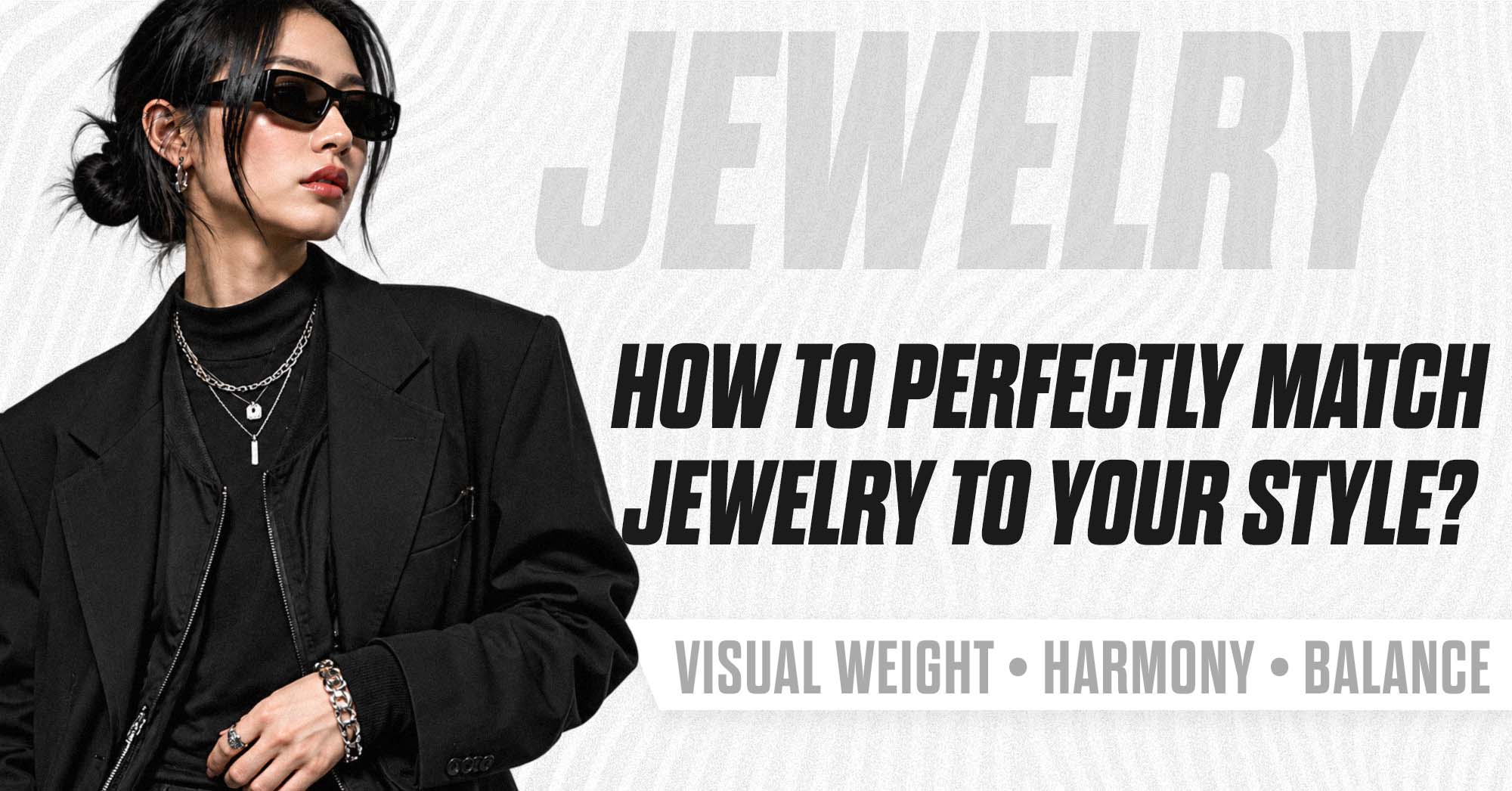
How to Perfectly Match Jewelry to Your Style
The right jewelry should look like it belongs to your outfit, not like it was added five minutes before leaving the house.
A necklace, ring, bracelet, or watch may take up very little space compared to a jacket or pair of pants, but accessories can completely change how an outfit feels. They can make a basic black fit look intentional, push a streetwear look toward luxury, or give a technical silhouette a sharper futuristic edge.
The problem is that many people choose jewelry piece by piece. They buy a ring because they like the ring, a chain because it looks good online, then try to wear everything together.
That usually creates visual noise.
Instead, jewelry should work exactly like the rest of your wardrobe. You need to think about style, proportion, color, texture, and balance.
Once you understand those elements, matching jewelry to your personal aesthetic becomes surprisingly easy.
Start With Your Style, Not the Jewelry

Before choosing a chain or stacking rings, look at what you already wear.
Your jewelry should speak the same visual language as your clothes.
A polished gold chain can look perfect with a clean luxury streetwear outfit, but completely out of place next to a tactical jacket, technical pants, and rugged sneakers.
Minimalist Style
Minimalism works best when the jewelry follows the same principle as the clothing.
Think:
-
Simple silver chains
-
Thin bracelets
-
Clean signet rings
-
Small pendants
-
Geometric shapes
-
One or two accessories at a time
The goal is not to remove personality. It is to create controlled visual impact.
A plain black T-shirt with one well-proportioned silver necklace can sometimes look stronger than an outfit covered in accessories.
Streetwear
Streetwear gives you more freedom.
Oversized T-shirts, hoodies, denim, sneakers, and layered silhouettes can handle jewelry with more visual weight.
Chunkier chains, rings, bracelets, and statement pendants can all work, especially when they help connect different parts of the outfit.
The important point is that bigger clothing usually needs stronger accessories.
A tiny necklace can disappear completely under an oversized hoodie or heavy jacket.
Dark Streetwear and Opium Style
Dark streetwear is where jewelry becomes particularly interesting.
Black denim, distressed fabrics, leather, washed cotton, oversized silhouettes, dark boots, and unconventional layering naturally work with jewelry that feels slightly aggressive or imperfect.
Consider:
-
Oxidized silver
-
Chunky rings
-
Cross pendants
-
Sculptural jewelry
-
Gothic-inspired shapes
-
Dark metals
-
Industrial hardware
The jewelry does not need to look polished.
In fact, worn finishes, irregular surfaces, and darker metals often work better because they match the texture and mood of the clothes.
Techwear and Futuristic Style
Techwear usually benefits from more restraint.
The outfit itself may already contain straps, buckles, zippers, pockets, technical fabrics, and multiple layers.
Adding too much jewelry can make the silhouette chaotic.
Instead, choose pieces that almost behave like hardware.
Look for:
-
Silver or gunmetal finishes
-
Clean geometric shapes
-
Matte metals
-
Industrial details
-
Minimal rings
-
Technical watches
-
Compact pendants
The objective is to make the jewelry feel integrated into the system of the outfit.
Match the Metal to Your Color Palette

Jewelry does not need to perfectly match every color in your outfit, but the metal should usually complement the overall palette.
Here is a simple starting point:
| Metal | Works especially well with | General effect |
|---|---|---|
| Silver | Black, grey, charcoal, white, washed denim | Cold, modern, industrial |
| Gold | Brown, beige, cream, olive, warm black | Warm, luxurious, vintage |
| Gunmetal | Black, technical fabrics, monochrome outfits | Futuristic, tactical, dark |
| Mixed metals | Neutral outfits, layered streetwear | Experimental, contemporary |
When Silver Works Best
Silver is probably the easiest metal to integrate into streetwear.
It looks particularly good against:
-
Black clothing
-
Grey tones
-
White T-shirts
-
Washed black denim
-
Technical fabrics
-
Dark leather
This is why silver appears so frequently in dark streetwear, punk, avant-garde fashion, and techwear.
It provides contrast without introducing a completely new color into the outfit.
When Gold Works Best
Gold immediately creates more warmth.
It pairs naturally with cream, brown, beige, olive, vintage denim, and warmer neutral colors.
It can also work beautifully with black, but the result feels more luxurious than futuristic.
A black oversized shirt with a gold chain communicates something completely different from the same outfit with oxidized silver jewelry.
Can You Mix Silver and Gold?
Yes.
The old rule that silver and gold should never be worn together is outdated.
The real question is whether the combination looks intentional.
For example:
silver rings + mixed-metal watch + one gold accent
can work.
One random gold bracelet surrounded by five completely different silver accessories may look accidental.
The problem is rarely mixing metals. The problem is mixing without a visual hierarchy.
Proportion Matters More Than Price

One of the biggest mistakes people make with jewelry is ignoring scale.
Your accessories need to make sense next to the volume of your clothes.
Oversized Clothes Need Visual Weight
Imagine an oversized leather jacket, wide black jeans, and heavy sneakers.
A tiny chain may disappear completely.
A slightly thicker necklace or more substantial ring creates enough visual presence to compete with the clothes.
You do not necessarily need enormous jewelry.
You simply need enough weight to balance the silhouette.
Slim Silhouettes Need More Restraint
The opposite is also true.
If you wear fitted tailoring, a narrow T-shirt, or a very clean monochrome silhouette, huge accessories can quickly become overwhelming.
Smaller jewelry allows the clothing to remain the main focus.
Let One Piece Dominate
A useful styling rule is to choose one accessory as the visual leader.
For example:
-
Statement ring + simple chain
-
Heavy necklace + minimal rings
-
Technical watch + no bracelets
-
Sculptural bracelet + plain necklace
Not every accessory needs to demand attention.
Good styling is often about deciding what should be noticed first.
How to Style Rings Without Overdoing It

Rings are one of the easiest ways to introduce jewelry into streetwear because they remain visible even when you are wearing heavy jackets or layered tops.
They also allow much more experimentation than many people realize.
Start With One Statement Ring
If you rarely wear jewelry, begin with one strong ring.
A signet ring, sculptural silver ring, or darker metal design can completely change the way a basic outfit feels.
It is also easier to understand what works with your wardrobe when you introduce jewelry gradually.
Stacking Multiple Rings
Once you become comfortable wearing rings, stacking gives you more options.
The secret is variety.
Avoid putting five rings of exactly the same size and shape on one hand.
Instead, experiment with:
-
Different widths
-
Smooth and textured surfaces
-
One larger ring surrounded by smaller pieces
-
Rings spread across both hands
-
Similar metals with different designs
This creates rhythm instead of repetition.
When a Ring Means More Than Style
Not every ring is simply a fashion accessory.
Some pieces are designed to stay with you for years, which makes the relationship between personal style and jewelry design even more important.
This is especially true when choosing something symbolic.
Even when looking through different engagement ring settings, the same styling logic applies. A ring should feel connected to the personality and everyday aesthetic of the person wearing it rather than existing completely outside their wardrobe.
A highly ornate setting may suit someone attracted to vintage or romantic design, while a cleaner setting can feel more natural for someone whose wardrobe is minimal, modern, or architectural.
The meaning of the ring is important, but so is the fact that it will become part of someone's visual identity.
Match Necklaces to the Neckline

Necklaces interact directly with the shape of your clothing.
That means the neckline matters almost as much as the necklace itself.
T-Shirts and Crew Necks
Crew-neck T-shirts create a simple background for jewelry.
A short or medium chain works particularly well because the necklace remains clearly visible against the shirt.
For graphic T-shirts, keep the necklace simpler so it does not compete with the artwork.
Hoodies and Layered Outfits
Hoodies create much more volume around the neck.
A small necklace may disappear completely.
You can either use a longer or heavier chain or simply shift attention toward rings, watches, or bracelets.
Trying to force every type of jewelry into every outfit is unnecessary.
Jackets and High Collars
Technical jackets, high collars, and heavily layered outerwear often leave little room for necklaces.
That is fine.
Sometimes not wearing a visible necklace is the better styling decision.
Let the jacket dominate and use jewelry on the hands instead.
Bracelets, Watches, and Wrist Balance

The wrist is another area where accessories can easily become overcrowded.
A watch already has considerable visual presence, especially if the case or strap is large.
Adding several bracelets next to it can work, but they need to feel connected.
For a clean techwear outfit, a technical watch may be enough.
For darker streetwear, you could combine a watch with one silver chain bracelet or a slim leather piece.
The goal is not to fill every available space.
Think of accessories as part of the composition of the outfit.
Match Jewelry to Materials, Not Just Colors

Color gets most of the attention when people talk about matching accessories, but texture can be even more important.
Different clothing materials create different visual environments.
Leather
Leather naturally works with jewelry that has weight and character.
Oxidized metals, thick rings, heavy chains, and darker finishes complement the texture particularly well.
Technical Fabrics
Nylon, ripstop, waterproof shells, and other performance fabrics usually look better with clean metal accessories.
Geometric jewelry and smooth industrial finishes preserve the technical feeling of the outfit.
Washed Denim
Distressed or faded denim works beautifully with aged silver and textured metals.
The slight imperfections in both materials reinforce each other.
Avant-Garde Tailoring
More architectural clothing can support sculptural jewelry.
A strange ring, irregular pendant, or unconventional bracelet can become an extension of the silhouette rather than a separate decoration.
Jewelry Rules Worth Breaking

Fashion becomes boring when every rule is treated like law.
Several traditional jewelry rules are worth ignoring.
"Never Mix Metals"
You can.
Just make the contrast look deliberate.
"Men Should Keep Jewelry Minimal"
There is no universal reason for that.
Some aesthetics genuinely benefit from multiple rings, heavy chains, or statement pieces.
"Everything Needs to Match"
Matching everything perfectly can actually make an outfit feel predictable.
You need coherence, not uniformity.
Contrast creates personality when it is controlled.
5 Jewelry Mistakes That Can Ruin an Outfit
1. Wearing Everything You Own
More jewelry does not automatically create more style.
Editing is part of styling.
2. Ignoring Proportions
Large clothes with invisible jewelry or delicate outfits with oversized accessories can feel visually unbalanced.
3. Mixing Aesthetics Instead of Metals
Silver and gold can work together.
A luxury tennis chain, bohemian bracelets, gothic rings, and tactical techwear all in one outfit is much harder to justify.
4. Fighting the Neckline
If a jacket or hoodie already dominates the neck area, do not force a necklace into the outfit.
5. Copying Someone Else's Jewelry Exactly
An accessory that looks incredible on someone else may not fit your wardrobe.
Use references for inspiration, then adapt them to your own silhouette and style.
Build Your Jewelry Rotation Like a Wardrobe
You do not need twenty necklaces and fifty rings.
A small selection of versatile pieces gives you far more control.
A strong starting rotation could include:
-
1 everyday chain
-
2 or 3 versatile rings
-
1 statement ring
-
1 bracelet
-
1 watch
-
1 stronger pendant or necklace
From there, add pieces only when they introduce something genuinely different.
That is the same logic used to build a good wardrobe.
Final Thoughts
Good jewelry should not rescue an outfit.
It should reinforce what the outfit was already trying to say.
Start with your personal aesthetic, then think about metal, proportion, texture, and placement. A dark streetwear outfit may need heavier silver accessories. Technical clothing may work better with minimal industrial details. A cleaner silhouette may only need one ring or necklace.
There is no universal formula because personal style is exactly that: personal.
But when every piece feels connected to the same visual idea, jewelry stops looking like decoration.
It becomes part of the outfit itself.



Leave a comment
This site is protected by hCaptcha and the hCaptcha Privacy Policy and Terms of Service apply.