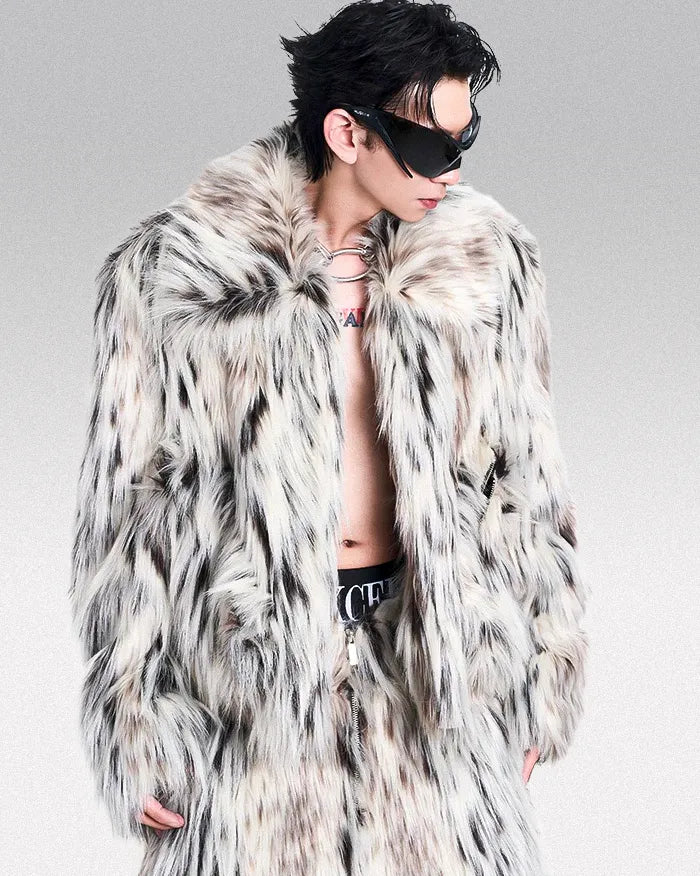
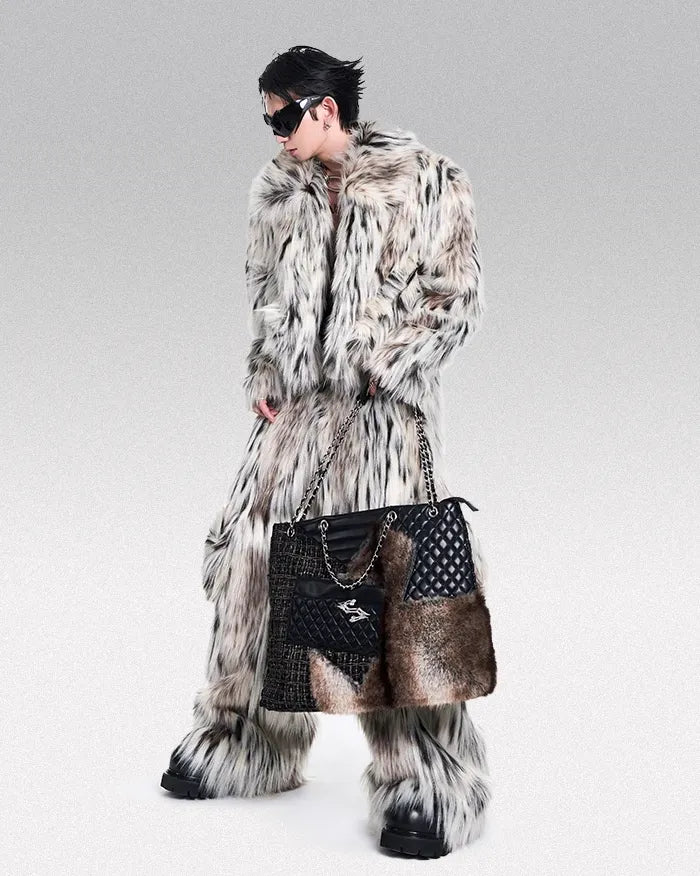
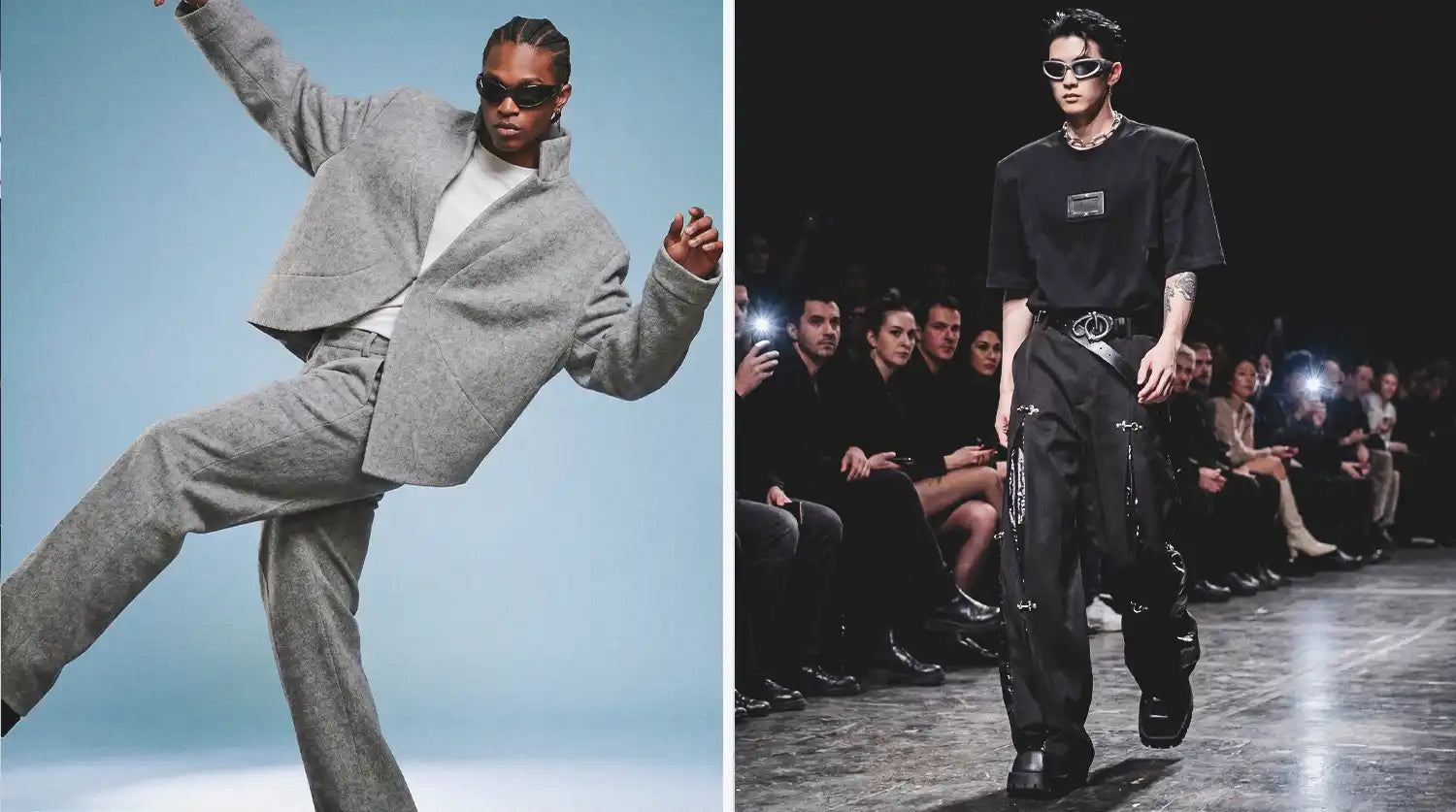
Avant-garde clothing is not just fashion. It is a statement, a philosophy, and a quiet rebellion against everything mainstream retail tries to sell you.
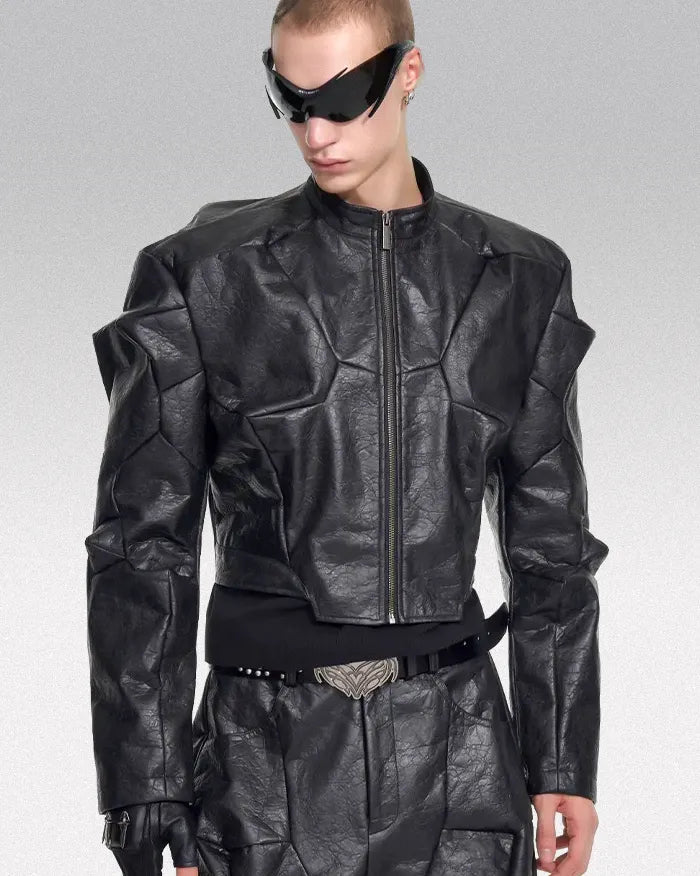
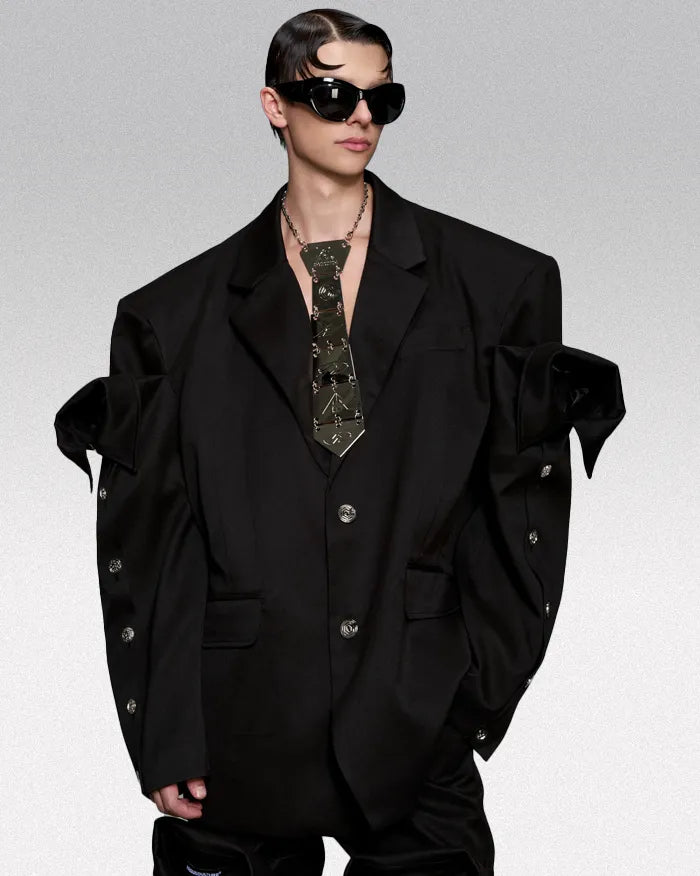
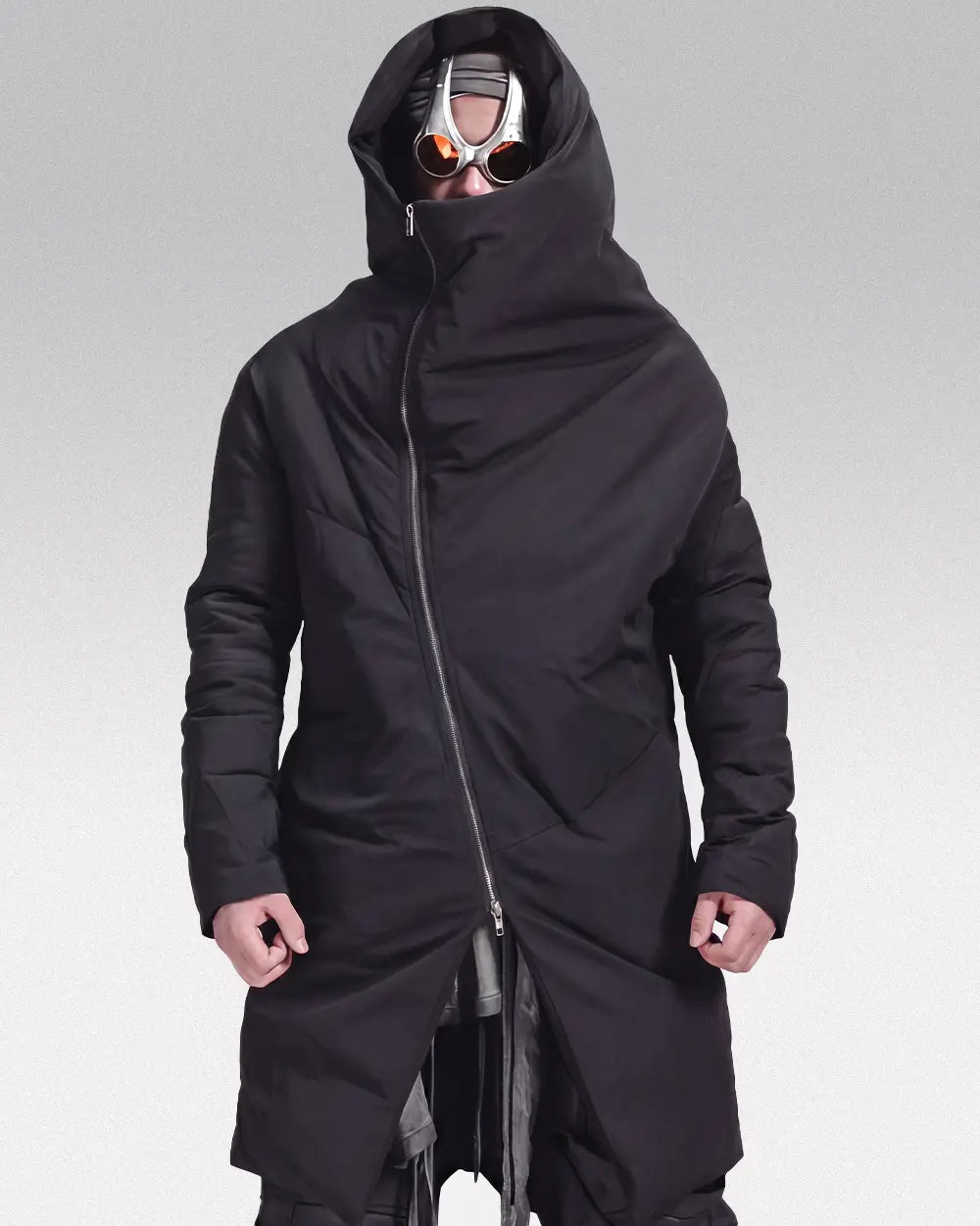
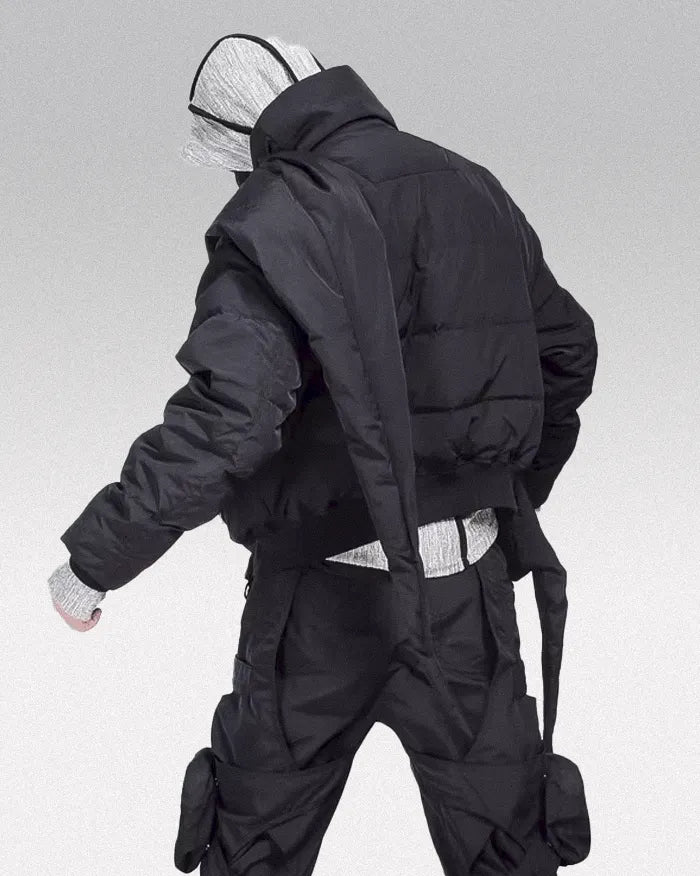
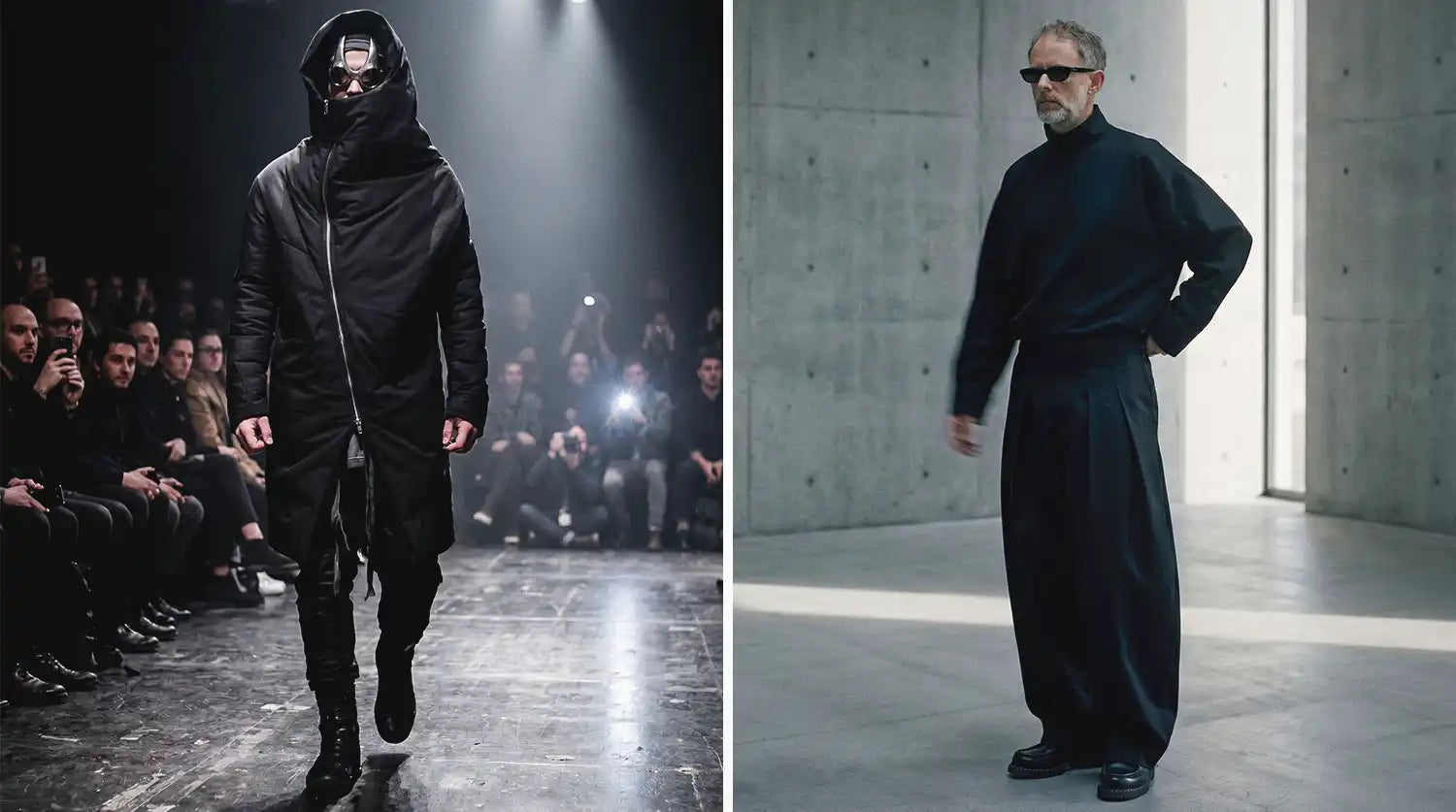
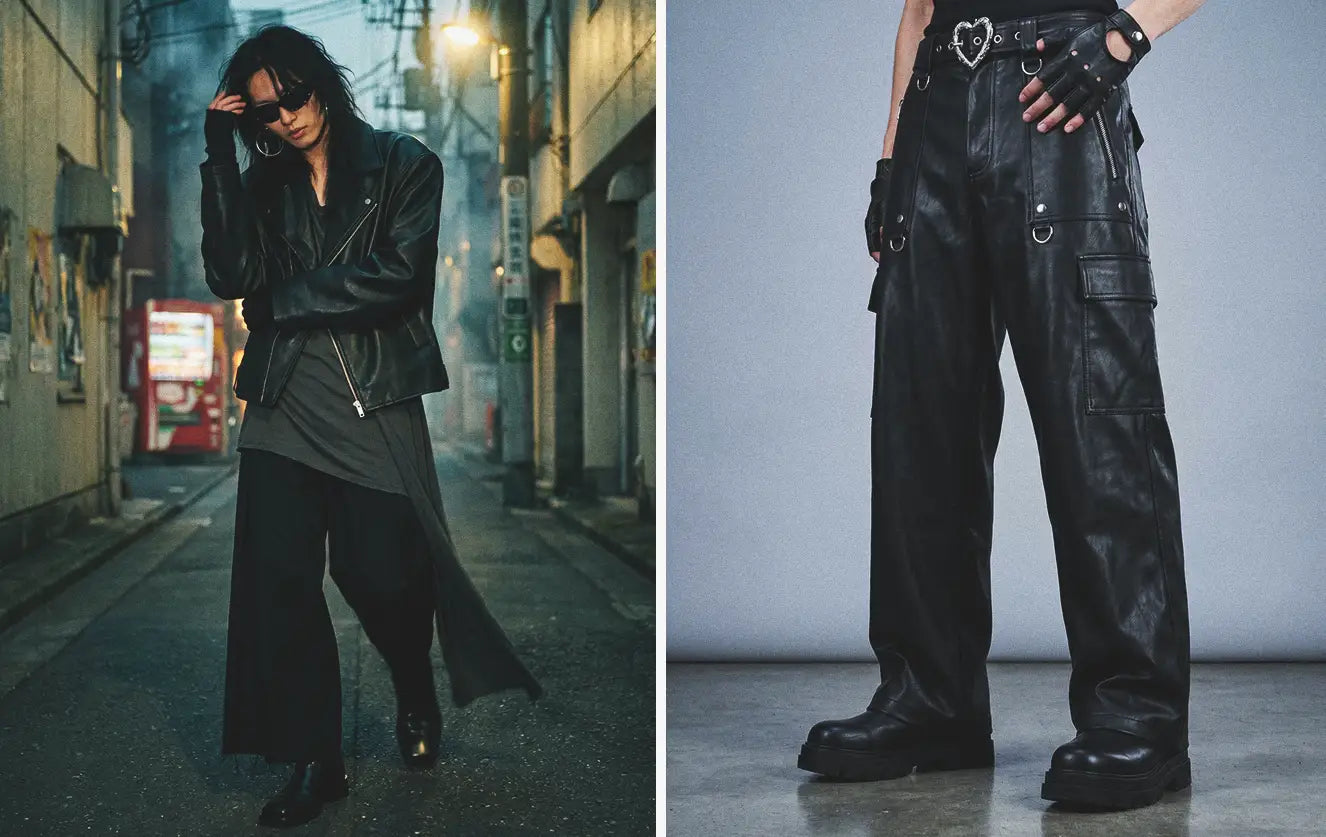
At TECHWEAR STORM™, our avant-garde collection brings together pieces that refuse to follow rules: oversized blazers that swallow the body, wide-leg pleated trousers inspired by Japanese masters, asymmetric jackets that look unfinished on purpose, and long coats that turn walking into performance.
This is clothing for people who understand that real style lives at the edge, not in the middle. Whether you are drawn to the architectural minimalism of Yohji Yamamoto, the deconstructed poetry of Margiela, or the dark dramatic energy of Rick Owens, you will find pieces here that speak the same language without the four-figure price tag.
What Is Avant-Garde Clothing? Understanding the Movement
The word avant-garde comes from French military language, meaning the troops at the front of an army. Applied to fashion, it describes designers and garments that lead trends rather than follow them. Avant-garde clothing rejects mainstream conventions in favor of experimentation, abstraction, and provocative form.
These are not clothes designed to disappear into a crowd. They are designed to question what clothing can be, how a body can be dressed, and where the line between fashion and art should sit. Avant-garde fashion is conceptual before it is wearable, and that is exactly why it has become one of the most influential movements in modern style.
A Brief History of Avant-Garde Fashion
Avant-garde fashion has roots stretching back over a century. In the 1930s, Elsa Schiaparelli collaborated with surrealist artists like Salvador Dalí to create garments that doubled as commentary.
The 1960s and 70s saw Pierre Cardin and André Courrèges introduce futuristic shapes that anticipated space-age design. But the real revolution came in 1981, when Rei Kawakubo and Yohji Yamamoto arrived in Paris and presented monochromatic, asymmetric, deconstructed collections that conservative critics dismissed as unwearable. They were wrong. As Dazed Digital explored in depth, this Japanese wave fundamentally reshaped Western fashion and directly inspired the Antwerp Six, including Martin Margiela and Ann Demeulemeester, who pushed deconstruction even further in the decades that followed.
The Core Philosophy: Form, Concept, Anti-Convention
At its heart, avant-garde clothing is built on the Japanese concept of wabi-sabi, an aesthetic that finds beauty in imperfection, asymmetry, and the marks left by time. This is why avant-garde garments often look unfinished, raw, or deliberately irregular. Exposed seams, raw hems, uneven proportions, and visible construction are not mistakes. They are the design.
Avant-garde clothing refuses Western symmetry in favor of something more honest, more human, and ultimately more interesting to wear. It is also why this style attracts intellectuals, artists, architects, and creatives who see clothing as an extension of thought rather than a uniform.
The Avant-Garde Aesthetic: Codes, Silhouettes and Materials
Avant-garde clothing follows its own visual grammar. Once you learn to recognize the codes, you start seeing them everywhere in the wardrobes of people who actually know fashion. Here are the four pillars that define the aesthetic across every piece in our collection.
Asymmetry and Deconstruction
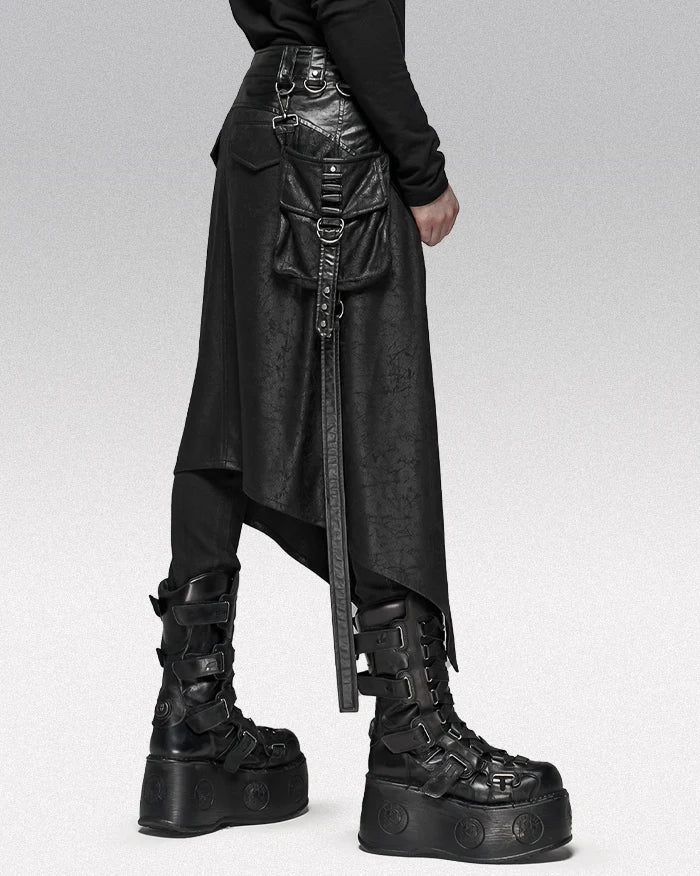
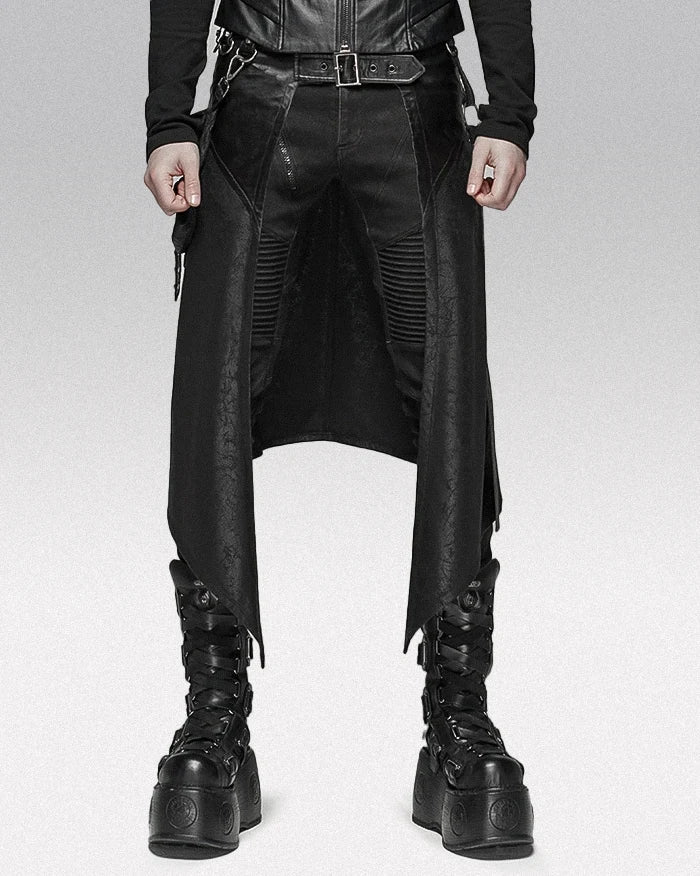
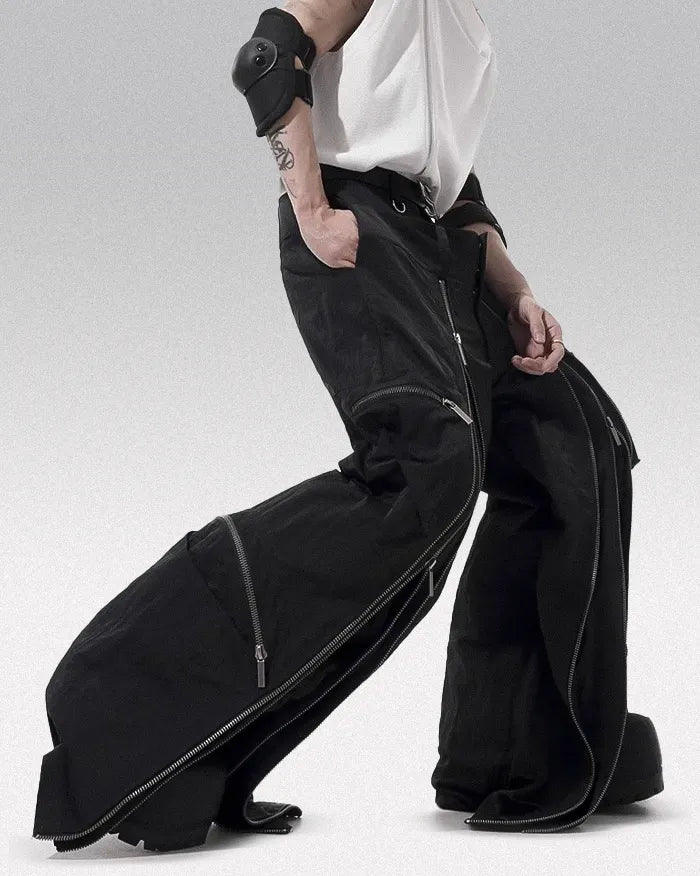
Symmetry is the easy choice. Avant-garde clothing rejects it on purpose. Look for hems that fall longer on one side, collars that wrap unevenly, zippers placed off-center, and panels that overlap without warning.
Deconstruction takes this further by exposing what traditional tailoring hides: raw edges, visible seams, unfinished cuffs, and reversed linings. The result is a garment that looks like it could be turned inside out and worn either way. This is the influence of Margiela, who built an entire house around this principle, and it remains one of the most recognizable signatures of the movement.
Oversized Volumes and Architectural Cuts
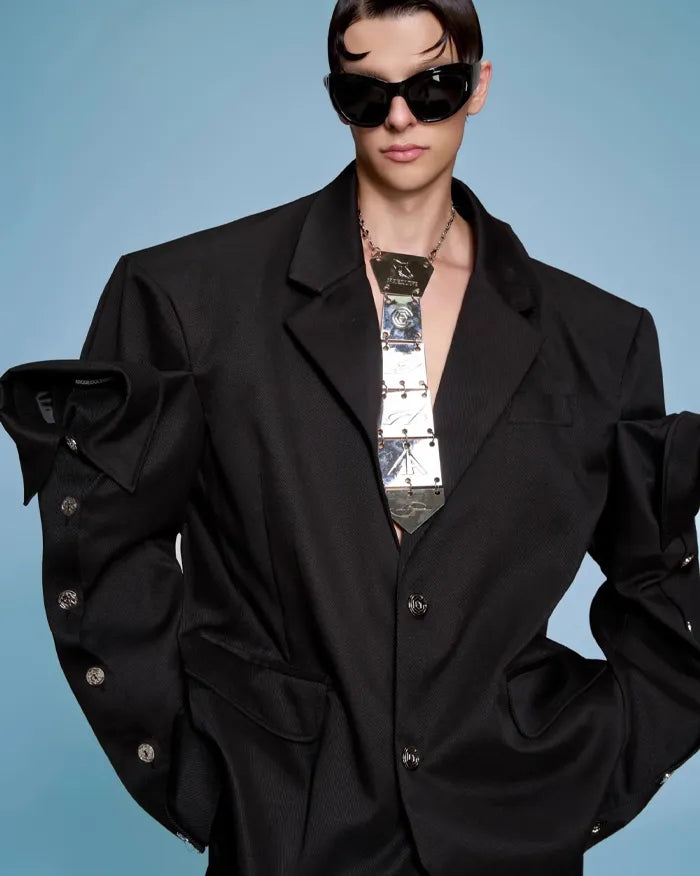
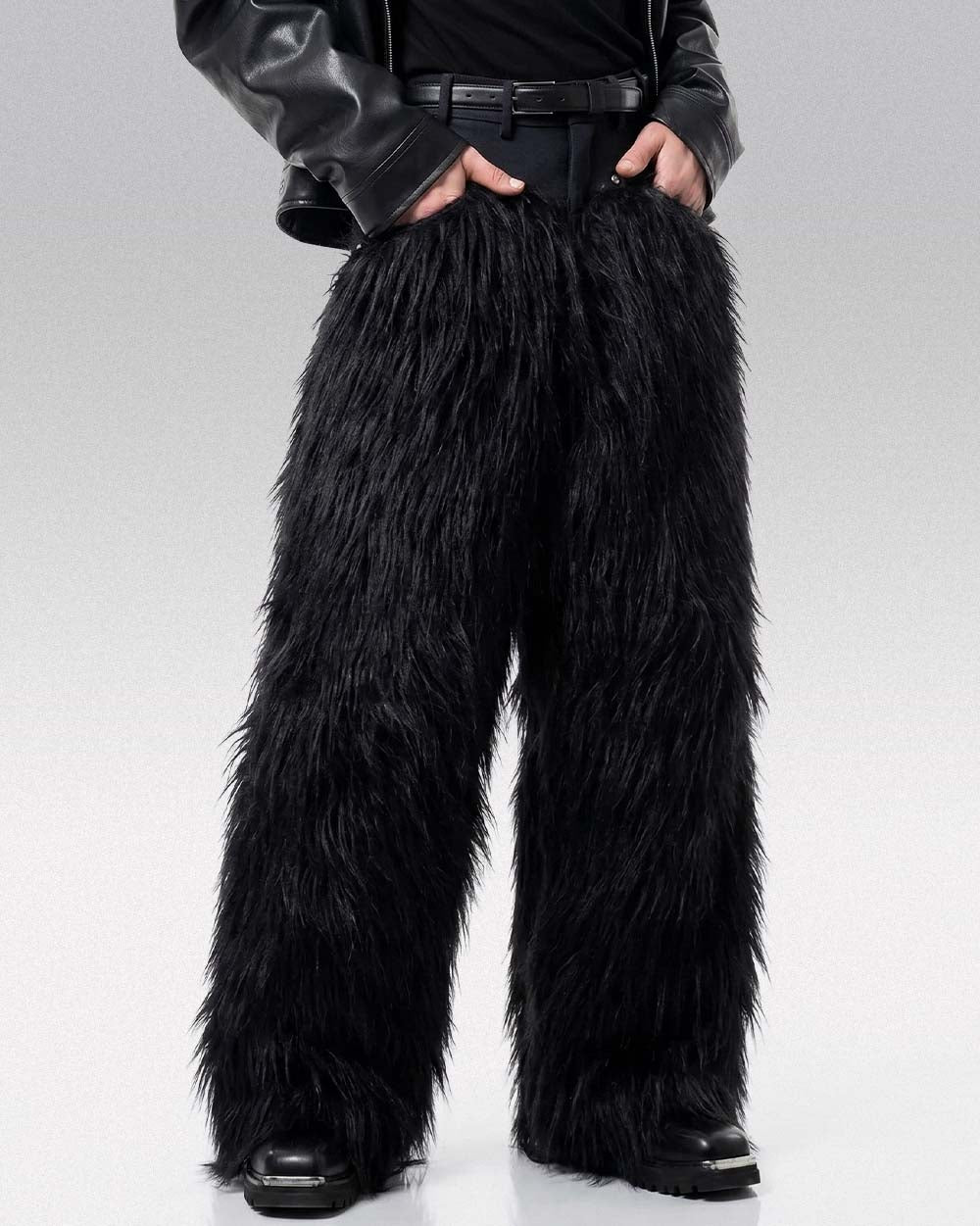
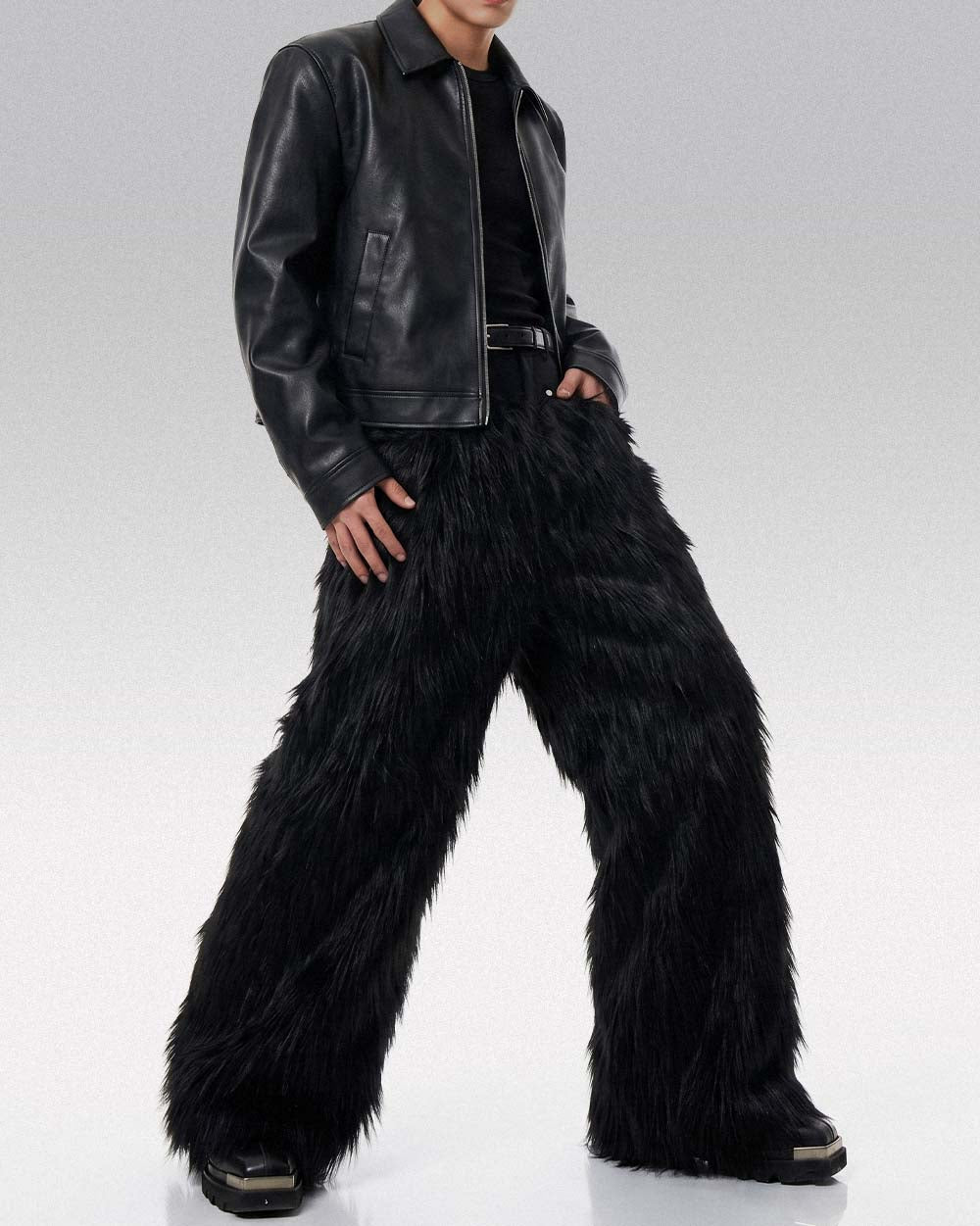
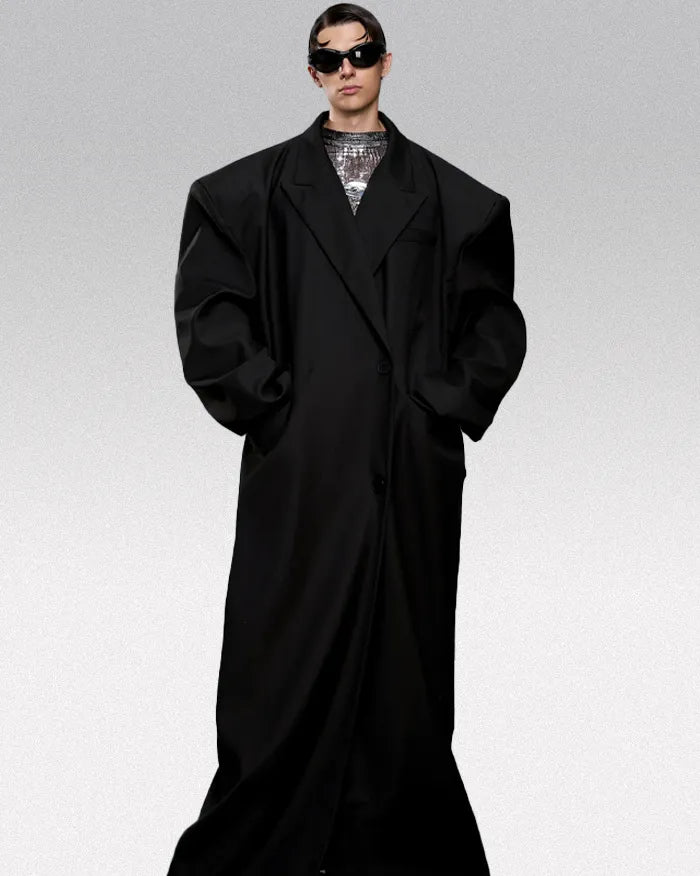
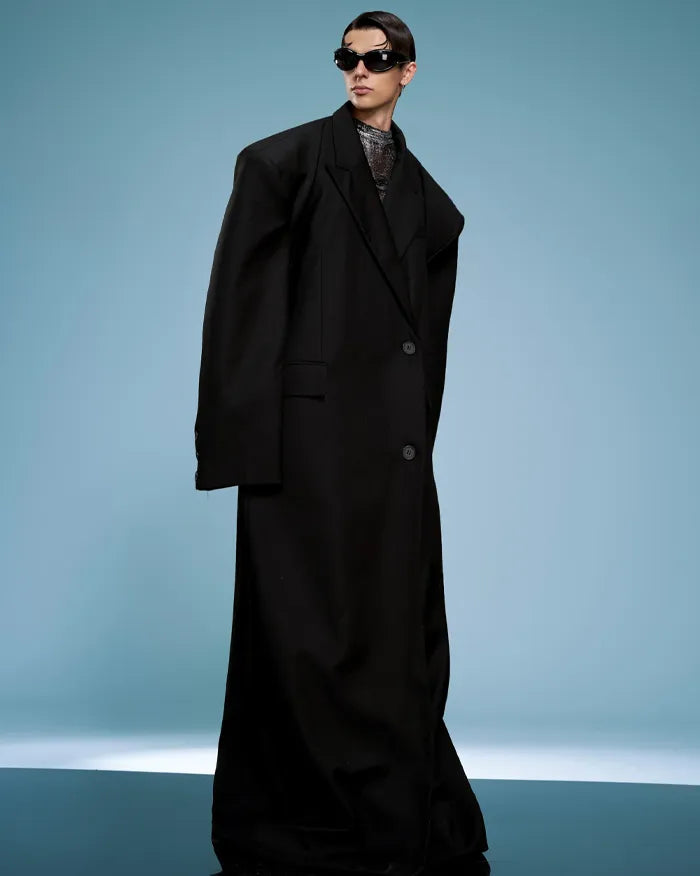
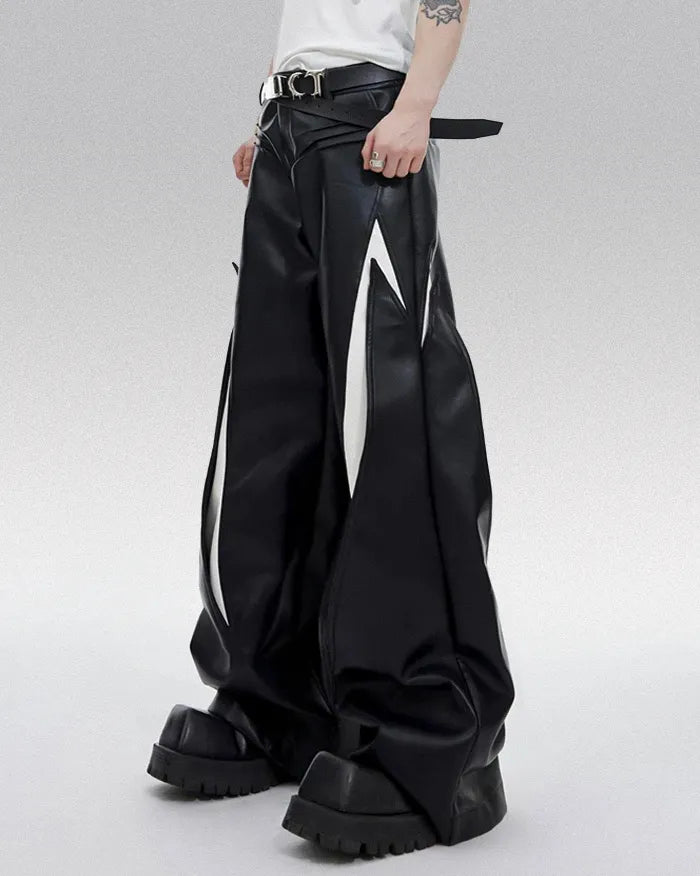
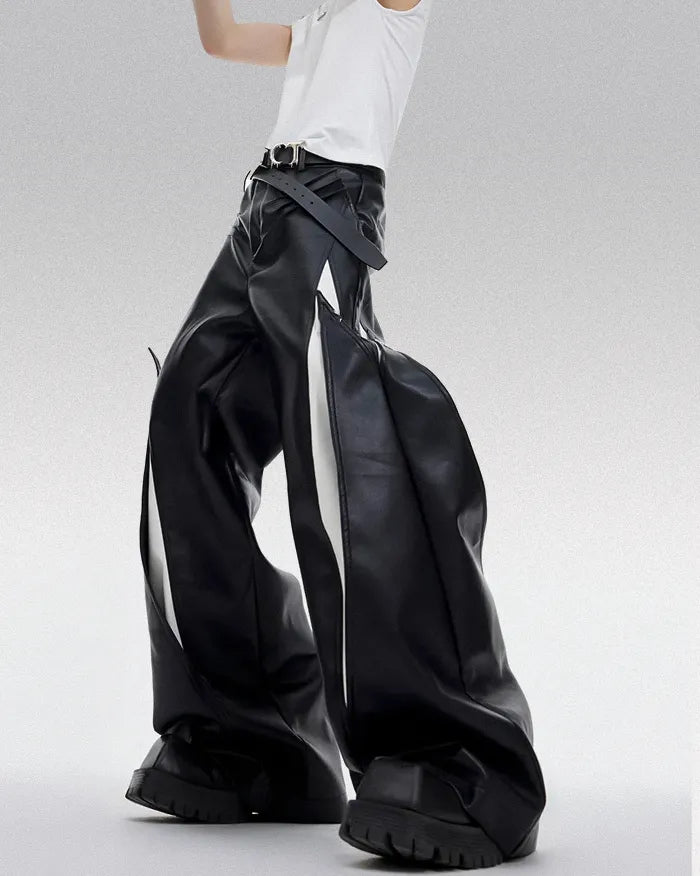
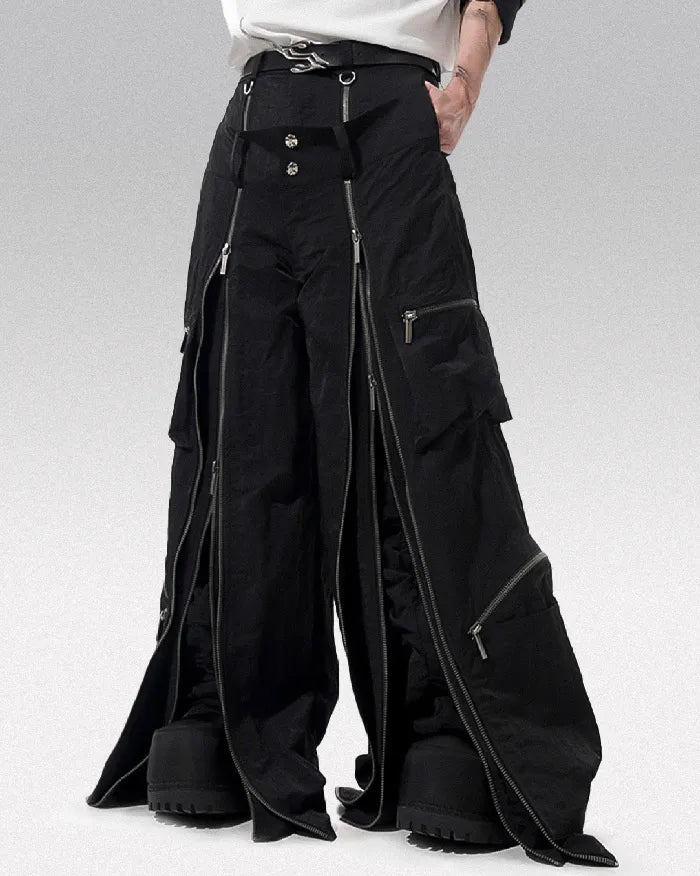
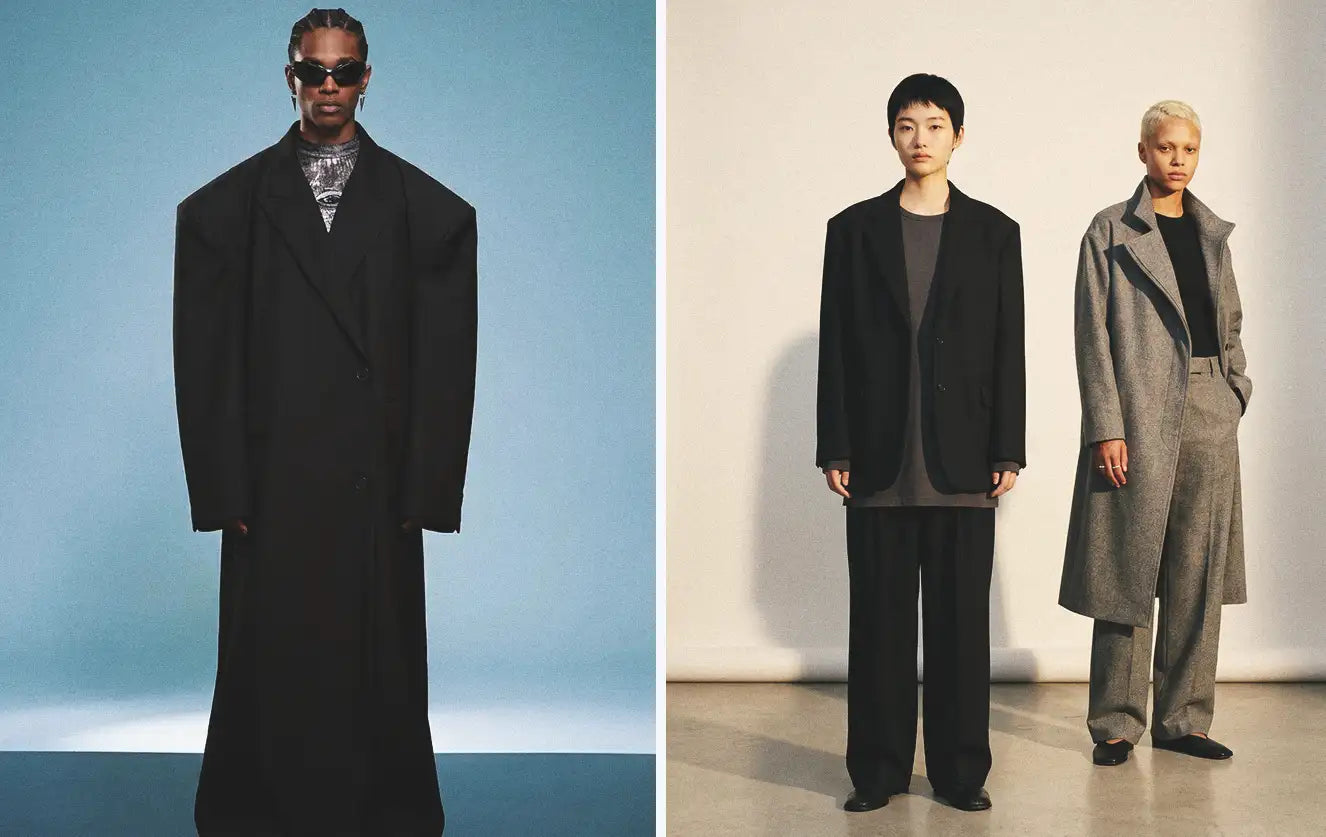
Avant-garde clothing plays with volume the way an architect plays with space. Wide-leg pleated trousers create columns of fabric that sweep the floor. Oversized blazers extend beyond the shoulders and drop past the hips. Drop-crotch pants and harem cuts move the silhouette away from the body in unexpected ways. Cocoon-shaped coats wrap the wearer in a sculptural shell. These are not casual oversized fits borrowed from streetwear. They are intentional architectural statements drawn from Japanese tailoring traditions, where the kimono historically prioritized flow and drape over fitted construction.
Monochrome Black and Quiet Luxury Greys
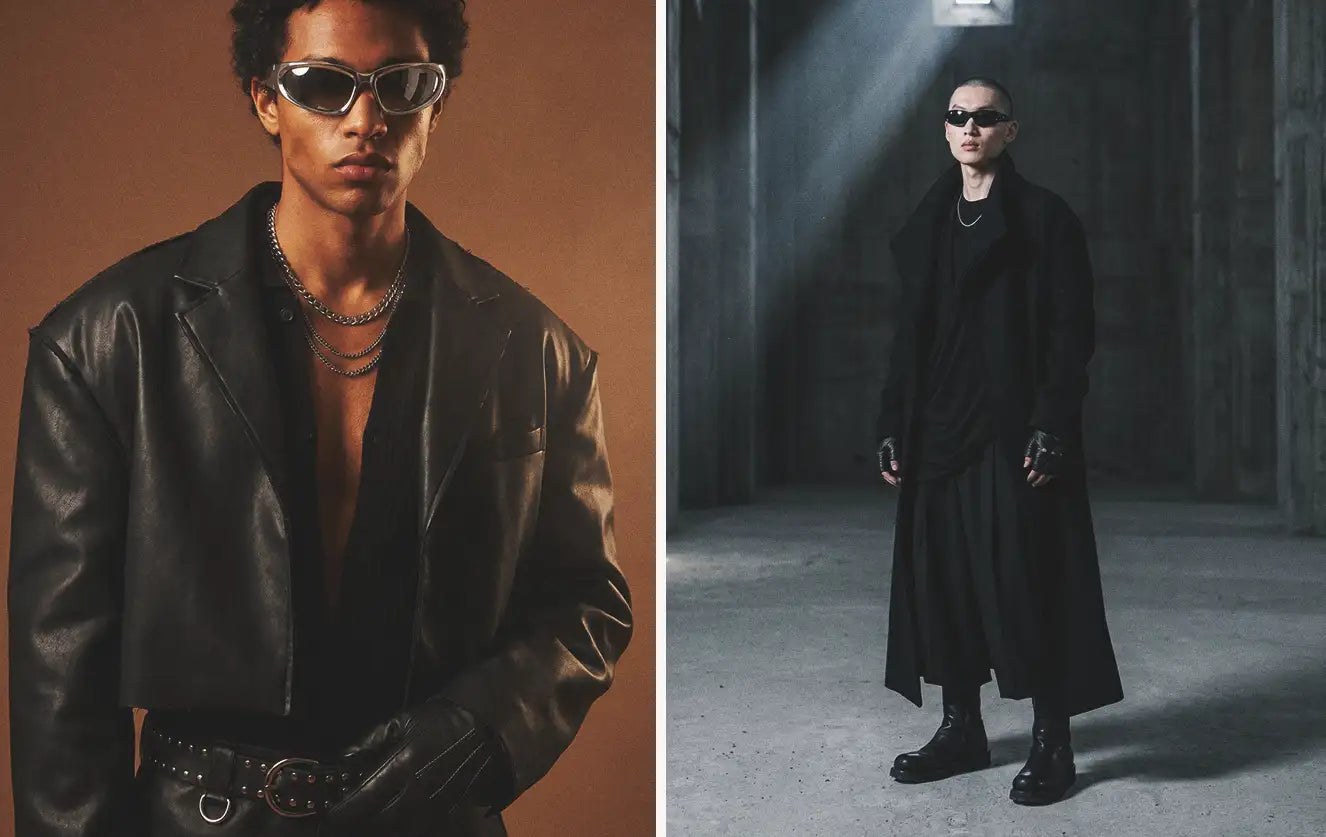
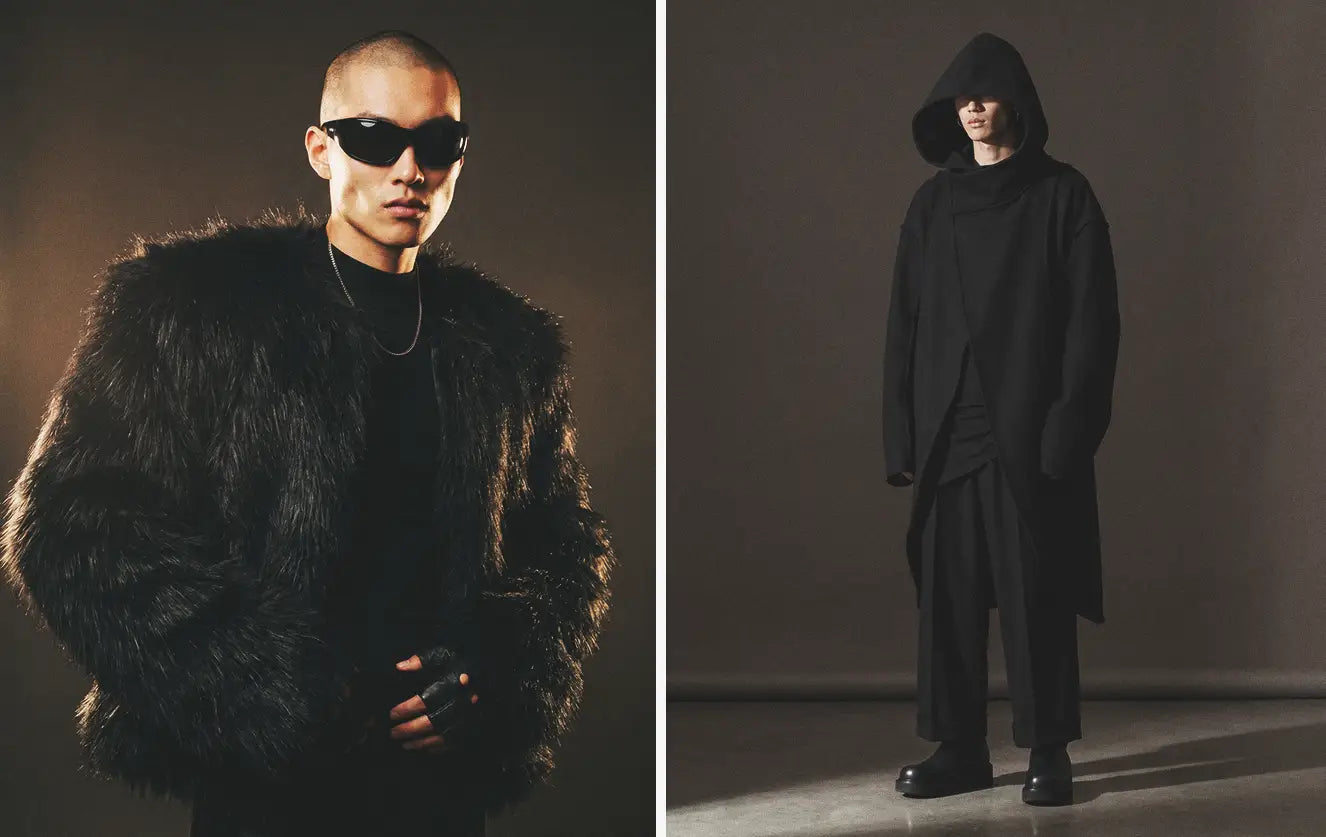
The avant-garde palette is famously restrained. Black dominates, but not the flat black of fast fashion. Avant-garde black has depth, texture, and tone variation between wool, leather, cotton, and felt.
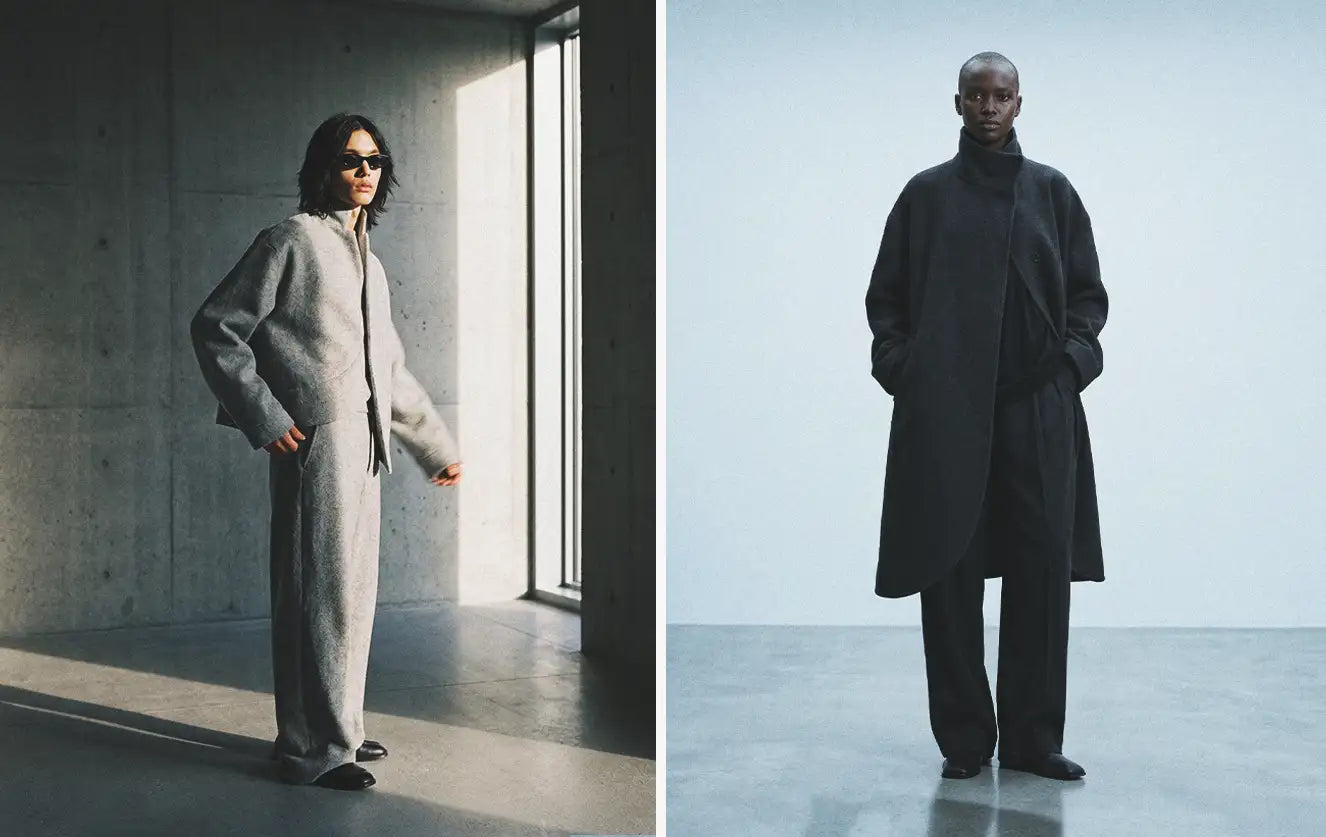
Heather greys, off-whites, and natural ecru tones appear as quiet alternatives. What you almost never see is loud color or visible logos. This is anti-branding clothing, designed to be recognized only by people who already know. The discipline of the palette is what allows the silhouettes and textures to do the talking, which is exactly the inverse of how mass-market fashion communicates.
Mixed Textures: Wool, Leather, Felt, Drape
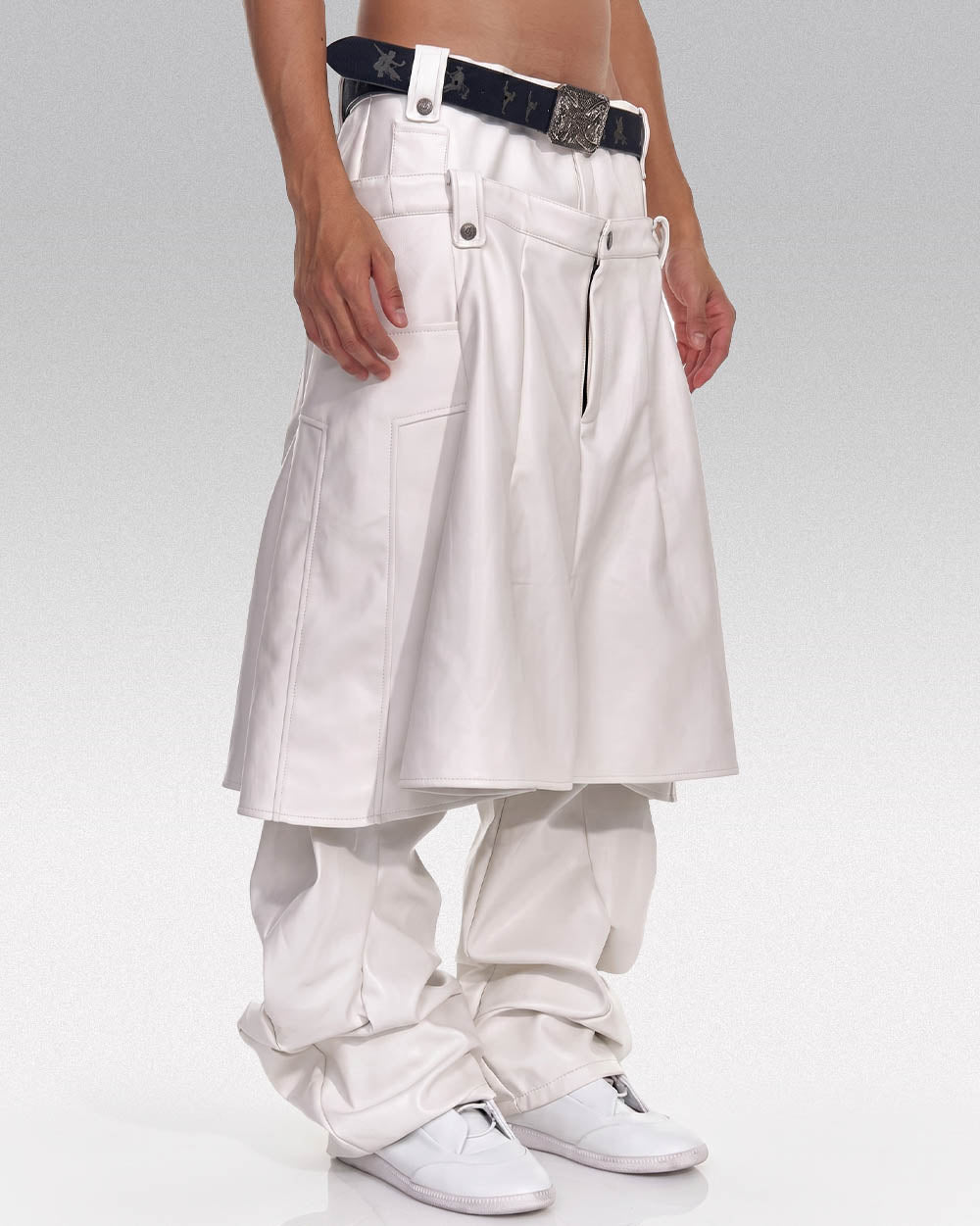
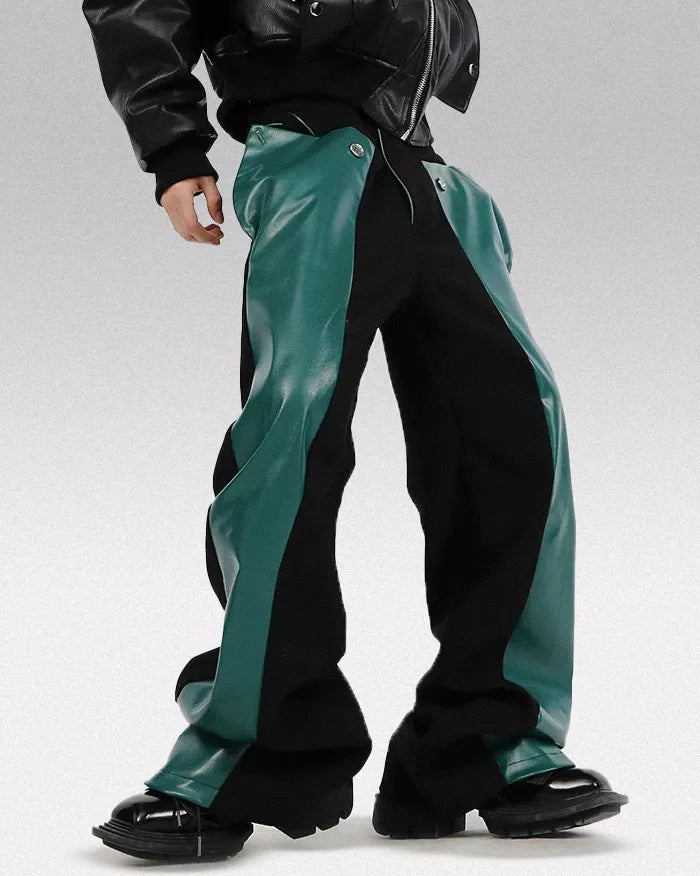
Where mainstream fashion separates materials by season and category, avant-garde clothing mixes them freely. A wool felt jacket sits over a faux leather pant. A cotton drape layer covers a structured blazer. Heavy textures meet soft drape in the same outfit without hesitation. This refusal to follow material hierarchies creates depth in monochrome looks and makes texture itself the form of color. It is also why avant-garde pieces photograph differently than they look in person, with the materials revealing themselves only as the wearer moves.
Our Avant-Garde Collection: Key Pieces
Every piece in this collection has been selected for its alignment with avant-garde principles: architectural cut, intentional silhouette, restrained palette, and a clear refusal of generic streetwear shortcuts.
We do not stock pieces that are simply "dark" or "edgy." We stock pieces that would feel at home in the wardrobe of someone who follows Yohji shows on rotation, owns a few Margiela tabis, and reads Dazed before lunch. Below, the three main categories that anchor the collection.
Avant-Garde Pants and Trousers
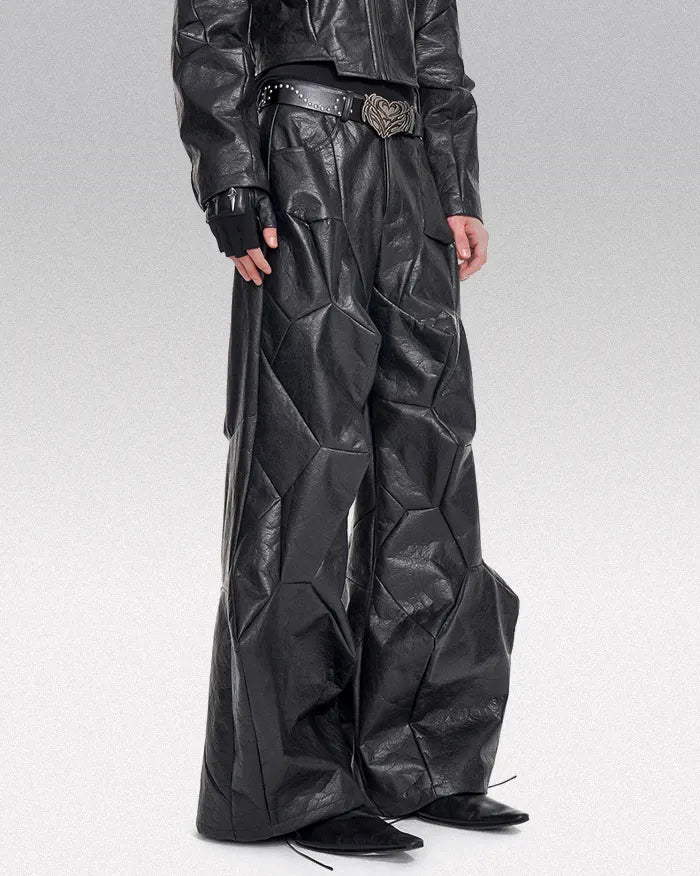
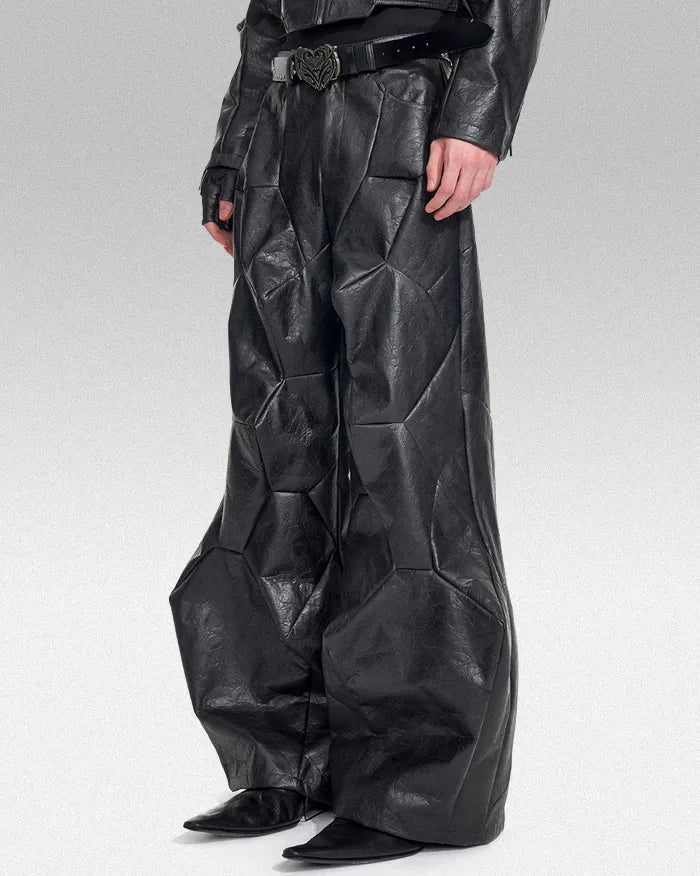
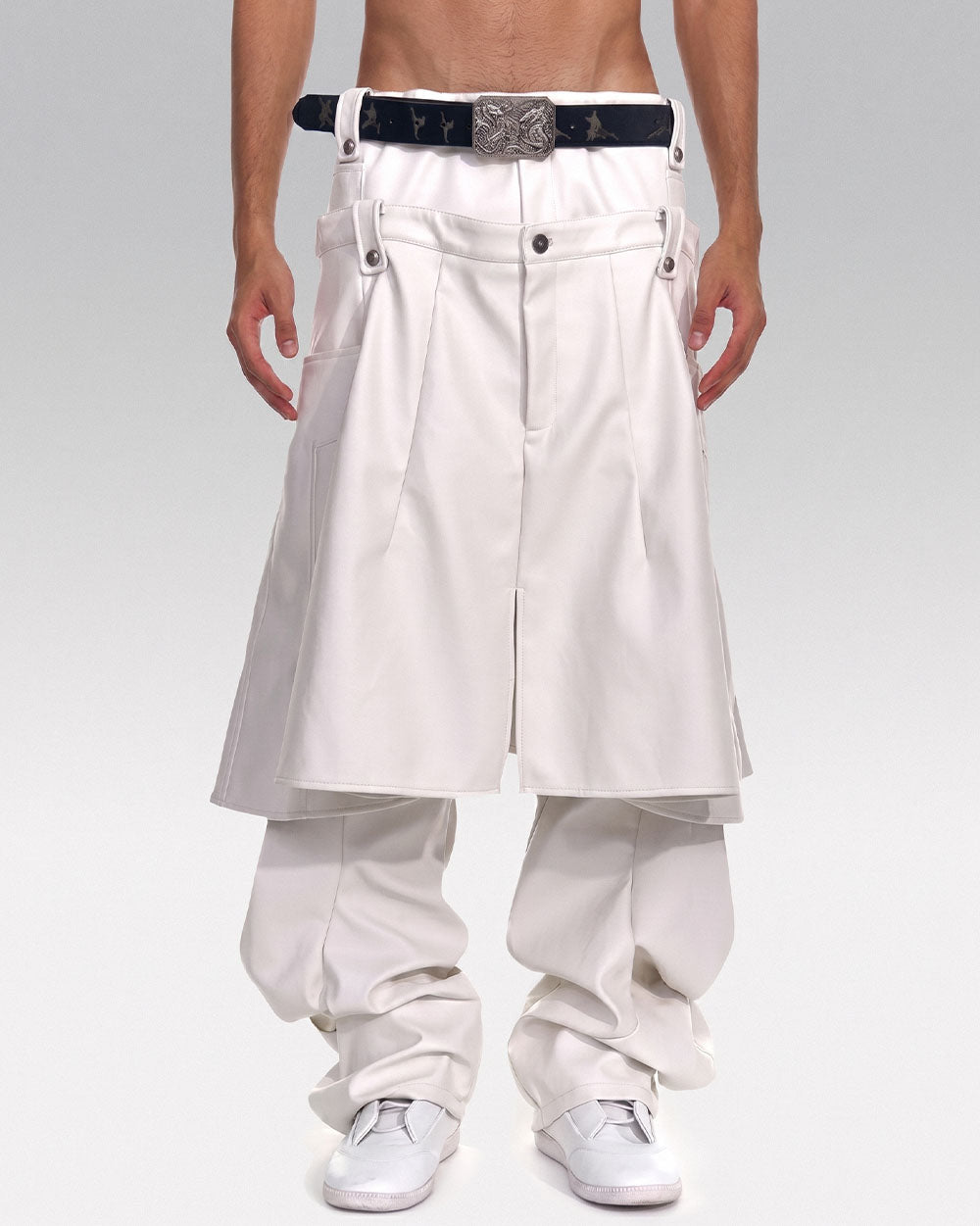
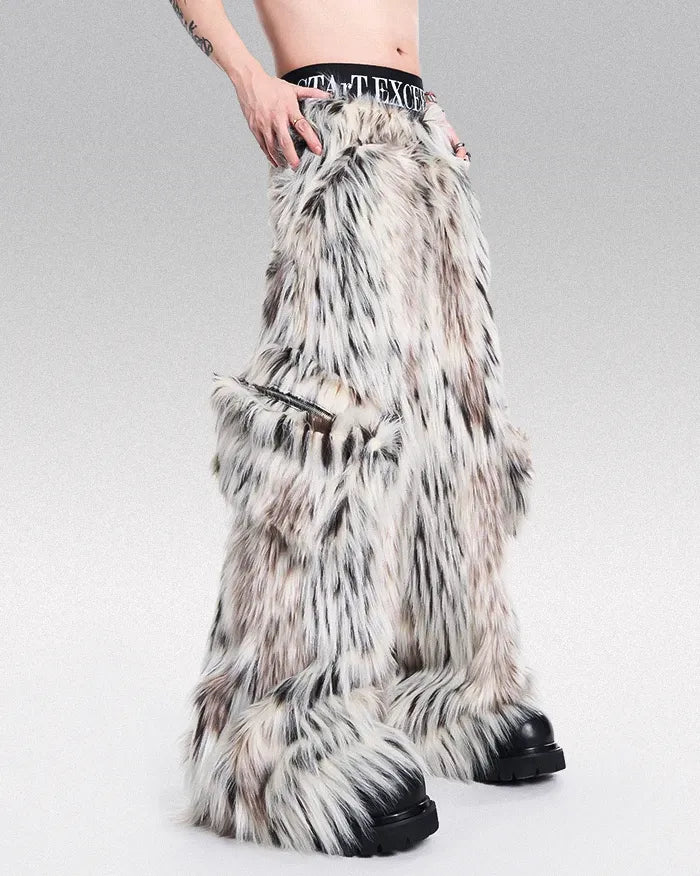
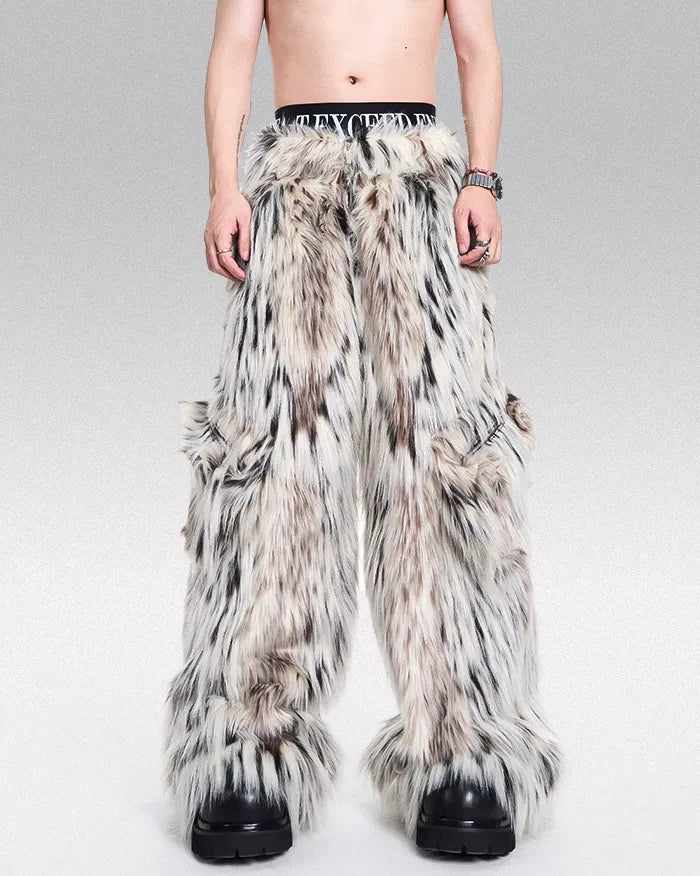
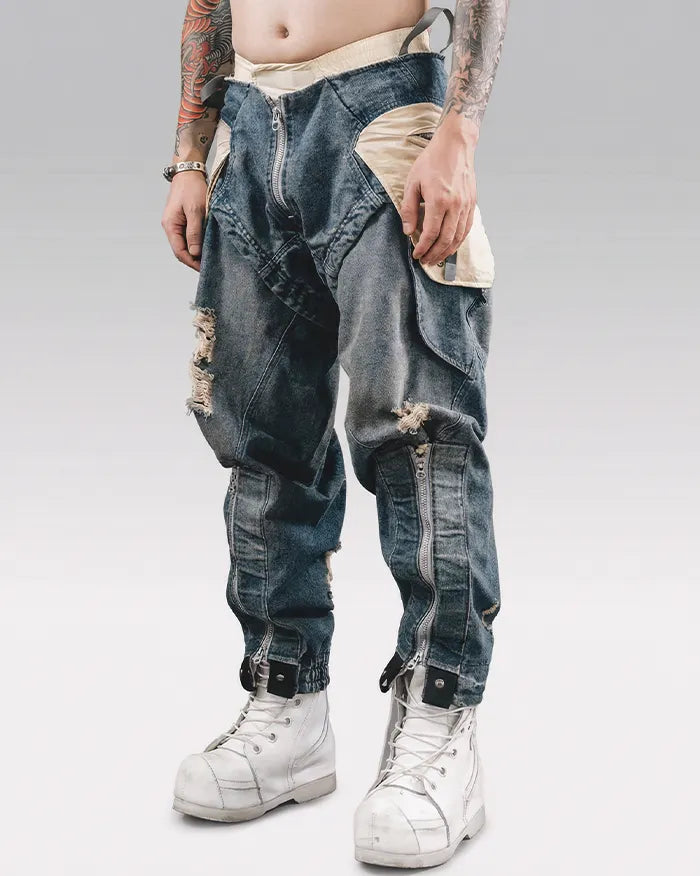
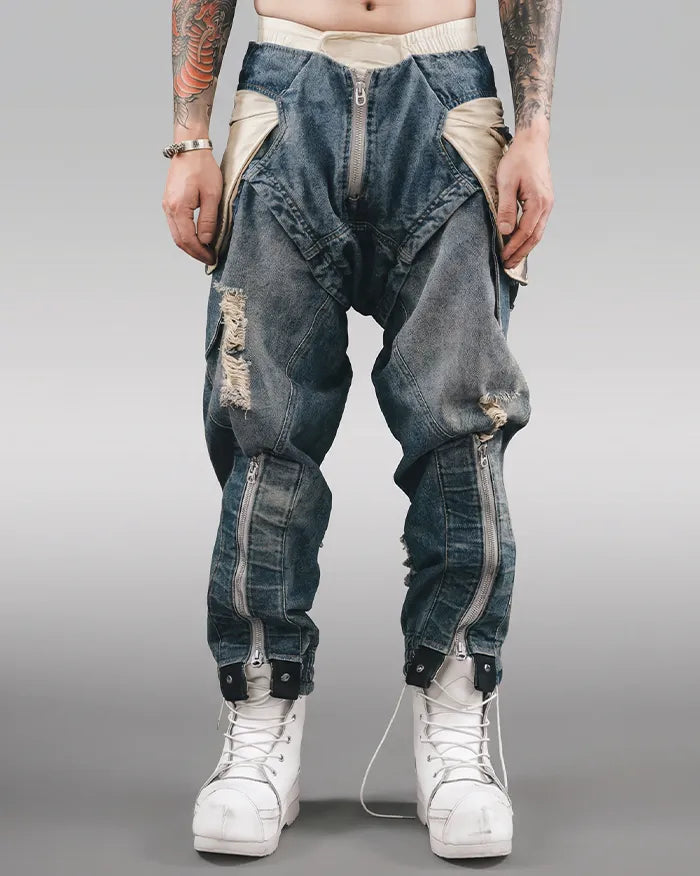
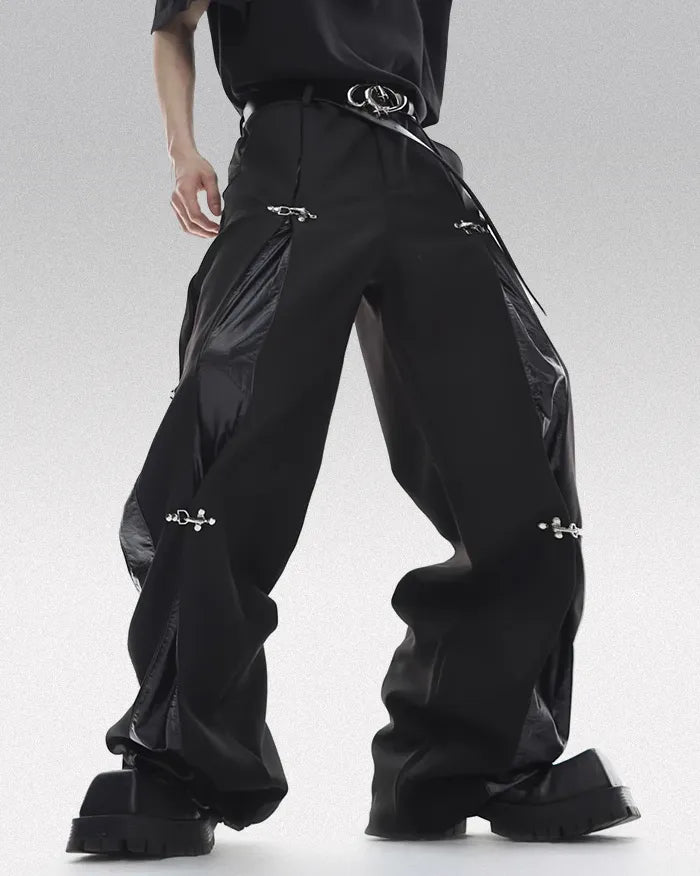
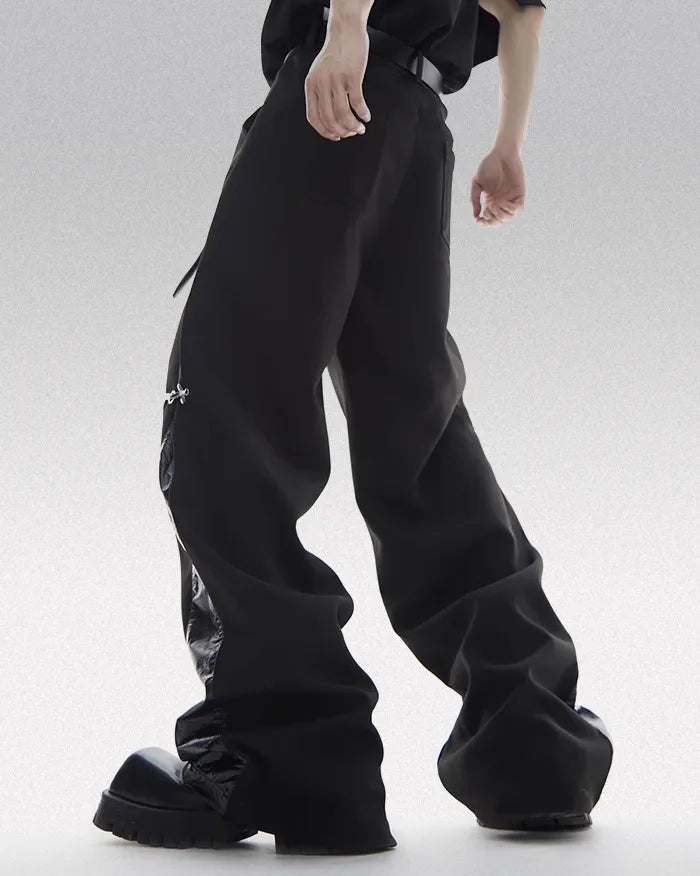
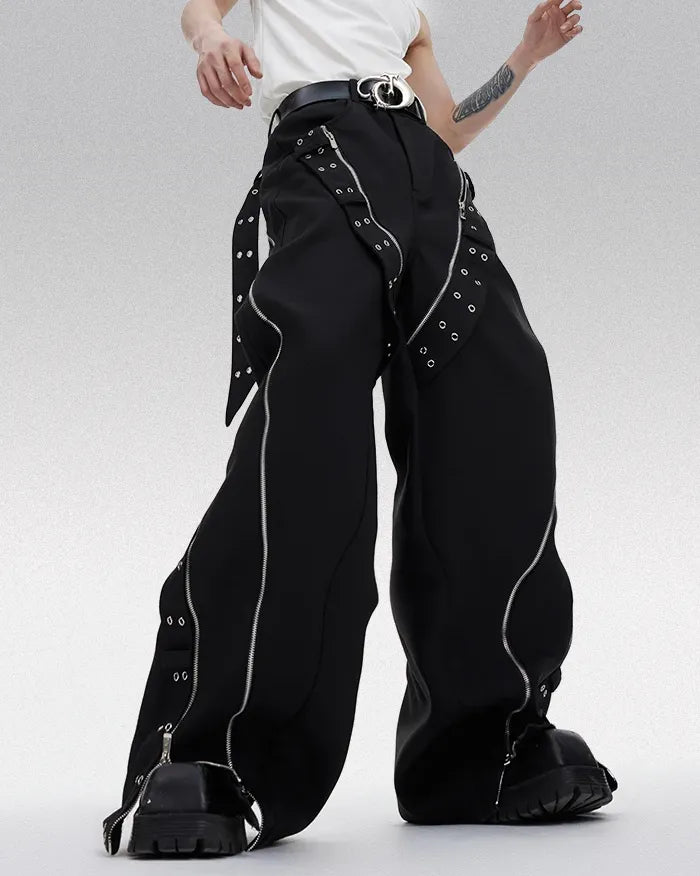
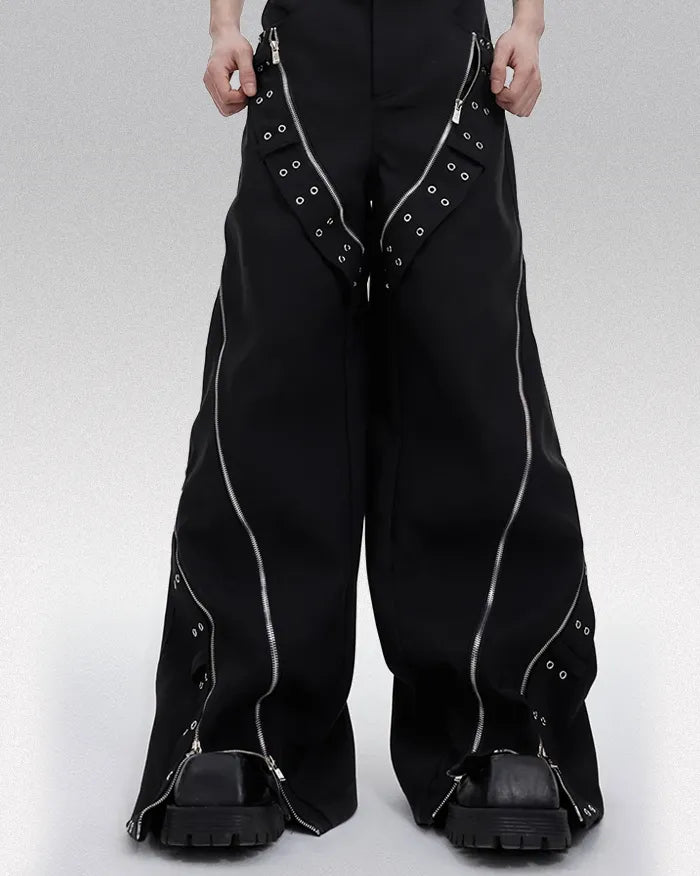
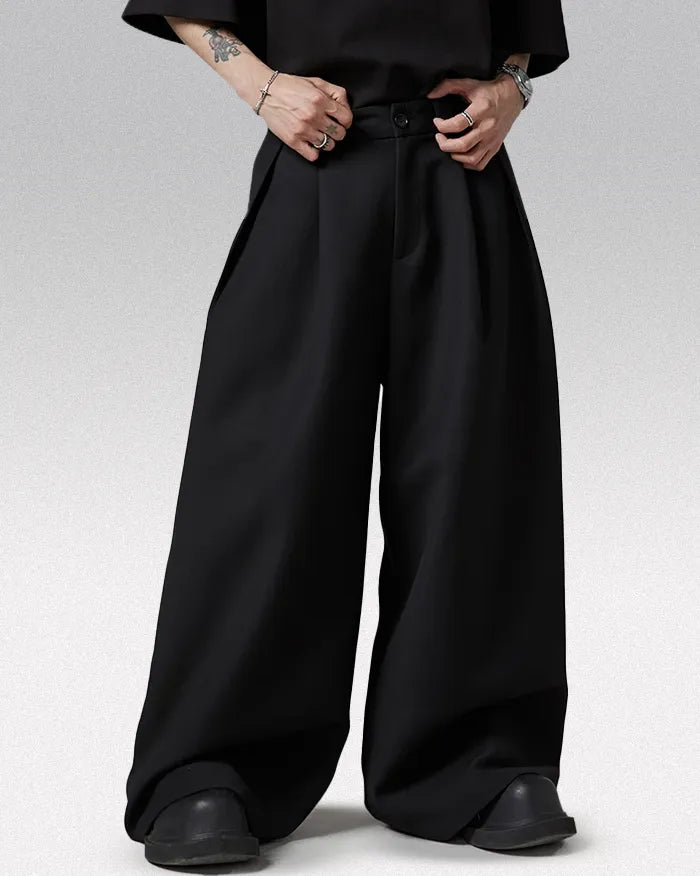
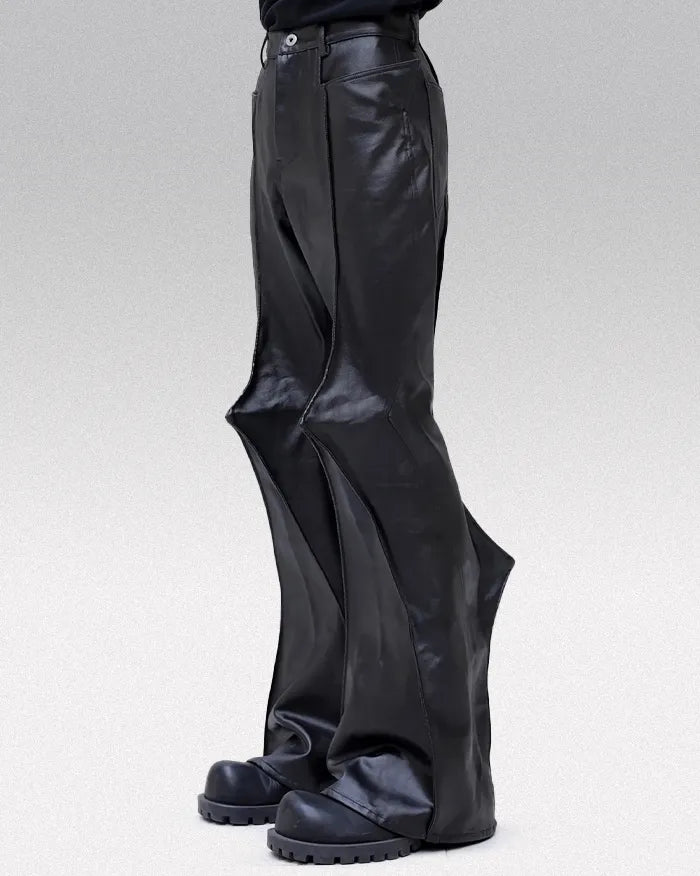
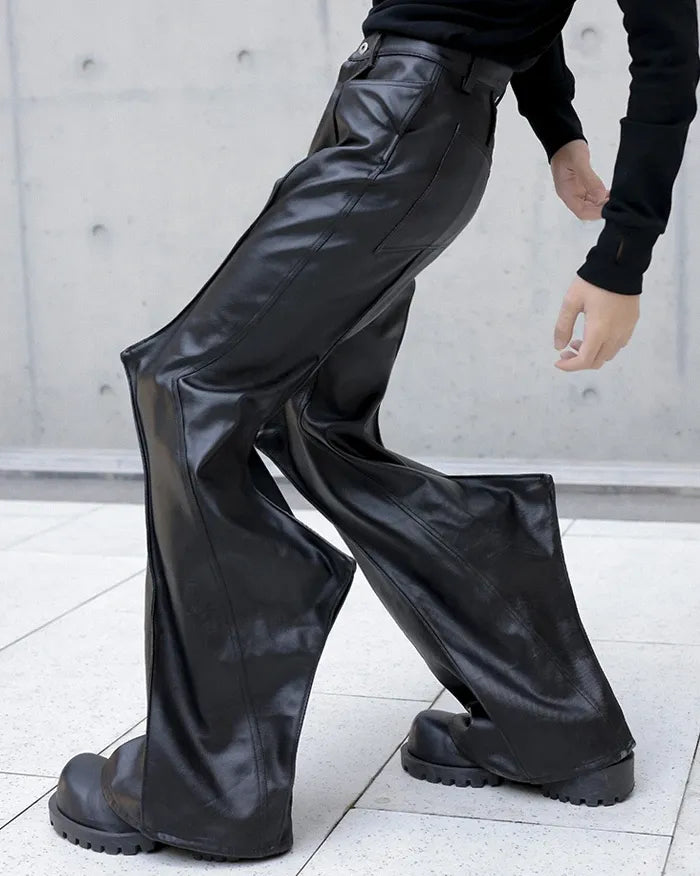
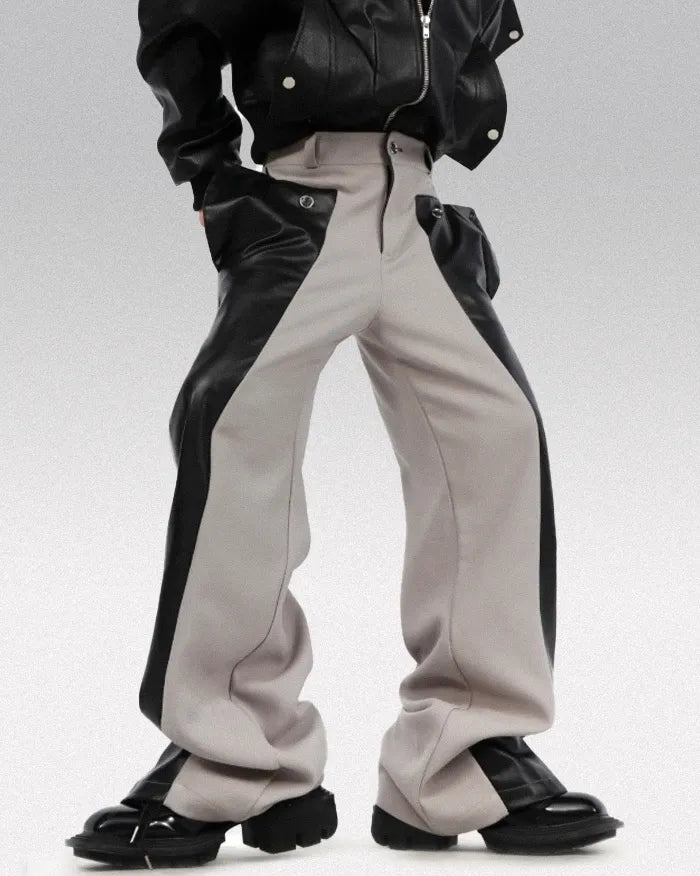
Pants are where avant-garde clothing tends to make its loudest statement, ironically through silhouette rather than color. Our trousers section gathers the wide-leg, the pleated, the dropped, and the harem-cut.
If you want to see the same architectural energy applied through a darker, more nocturnal lens, our opium clothing collection shares some DNA but pushes further into vampire-rockstar territory. The avant-garde pants here remain anchored in the quiet, Japanese-inspired tradition where the silhouette matters more than the surface treatment.
Wide-Leg Pleated Trousers
Deep front pleats, mid to high rise, voluminous through the leg, gathering softly at the hem. Wide-leg pleated trousers are the most recognizable silhouette in Japanese avant-garde tailoring, invented by designers who wanted to free the leg from Western trouser conventions. Worn with a fitted top, they create the dramatic A-line silhouette that has defined editorial fashion for forty years.
Drop-Crotch and Harem Pants
Drop-crotch pants lower the seat of the trouser, creating extra fabric between the waist and the knee. Harem cuts take this further with gathered ankles and pronounced volume through the thigh. Both styles trace back to traditional Asian and Middle Eastern garments and have been a recurring obsession for designers like Yamamoto and Issey Miyake. They are not for everyone, but worn well, they are unmistakable.
Avant-Garde Jackets and Outerwear
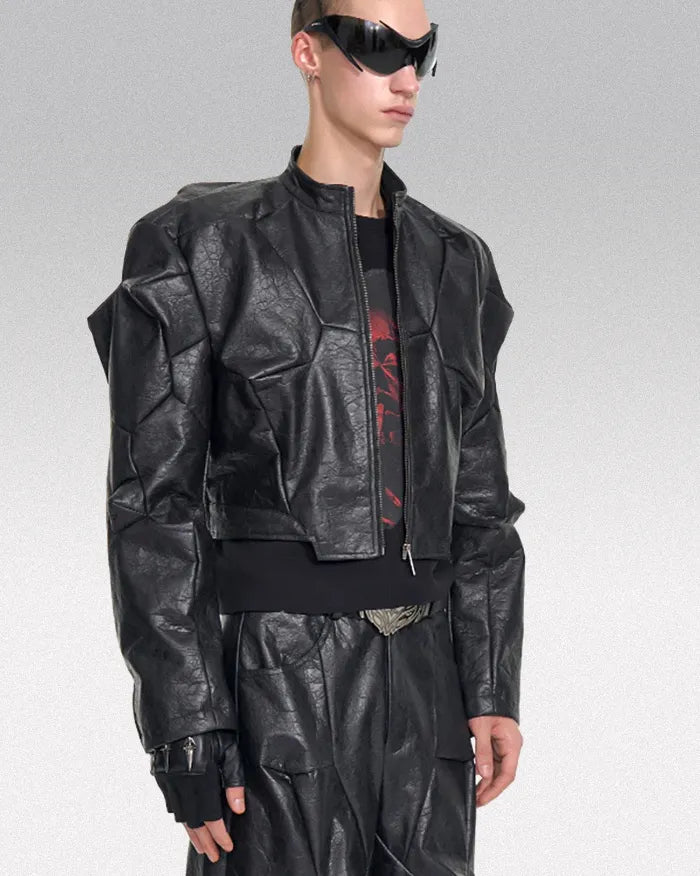
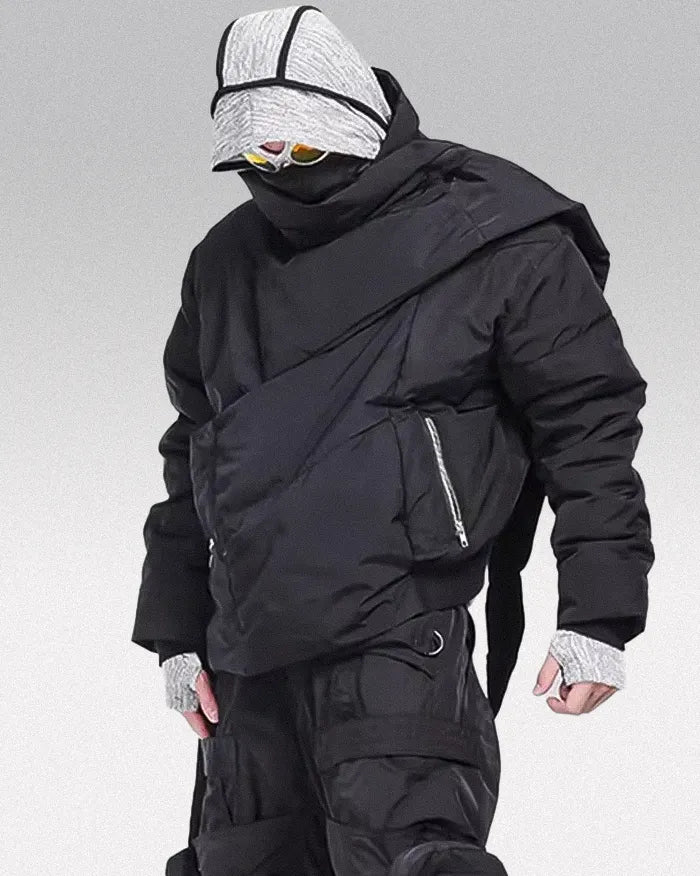
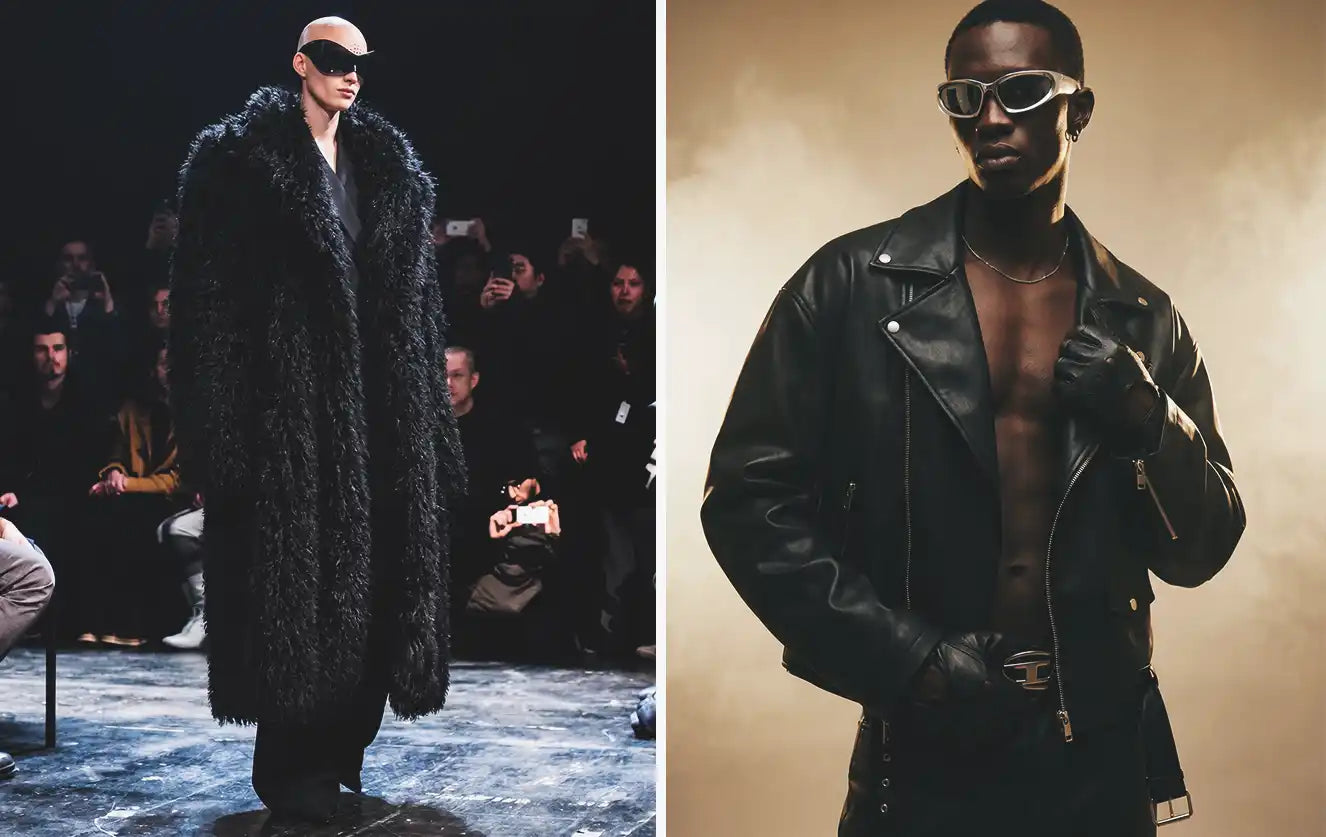
Outerwear is where avant-garde clothing earns its reputation. The jackets and coats in this collection do not follow the standard biker, bomber, or trench templates. Instead, they reinterpret outerwear as sculpture.
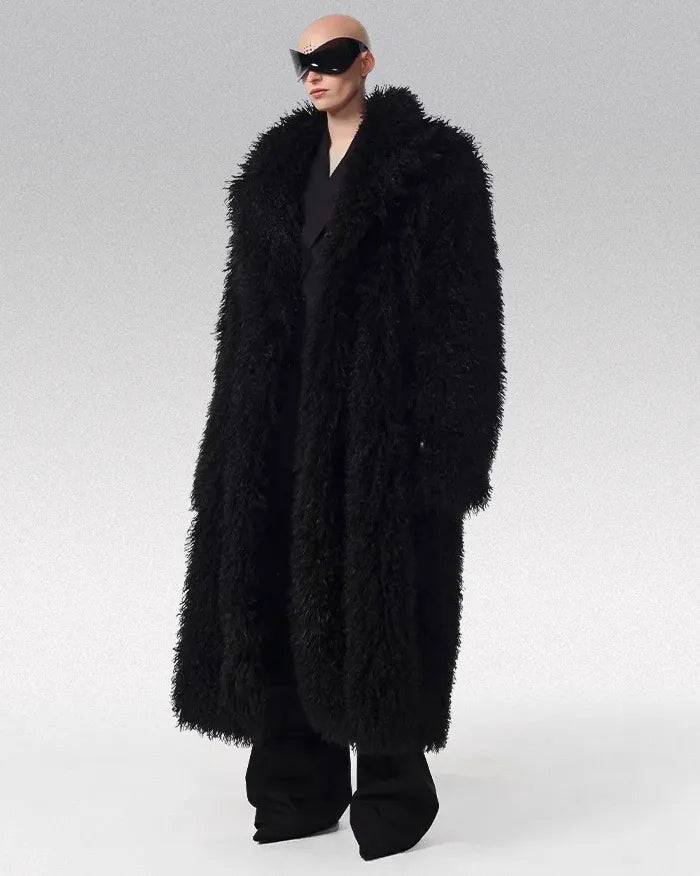
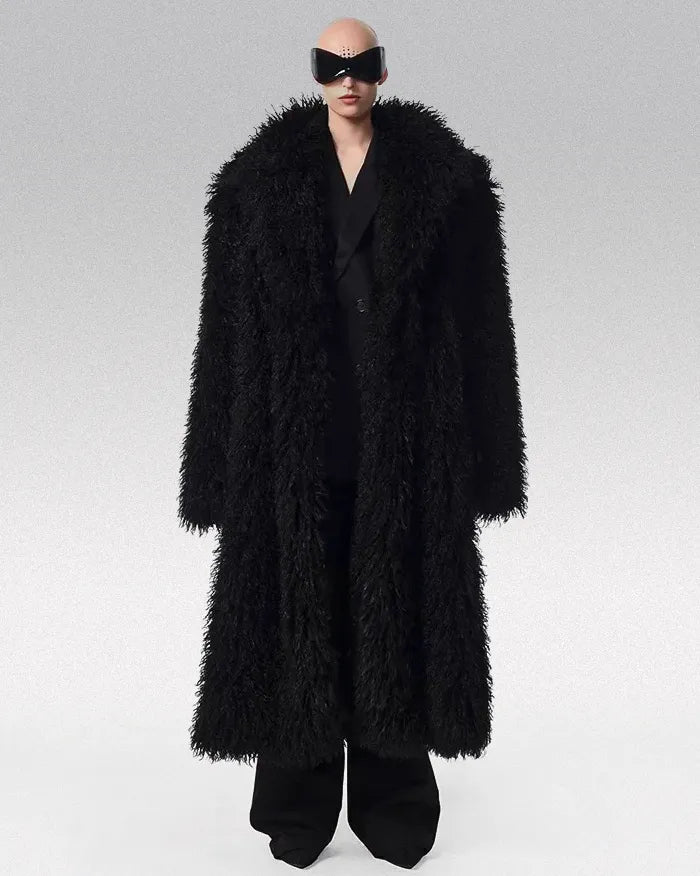
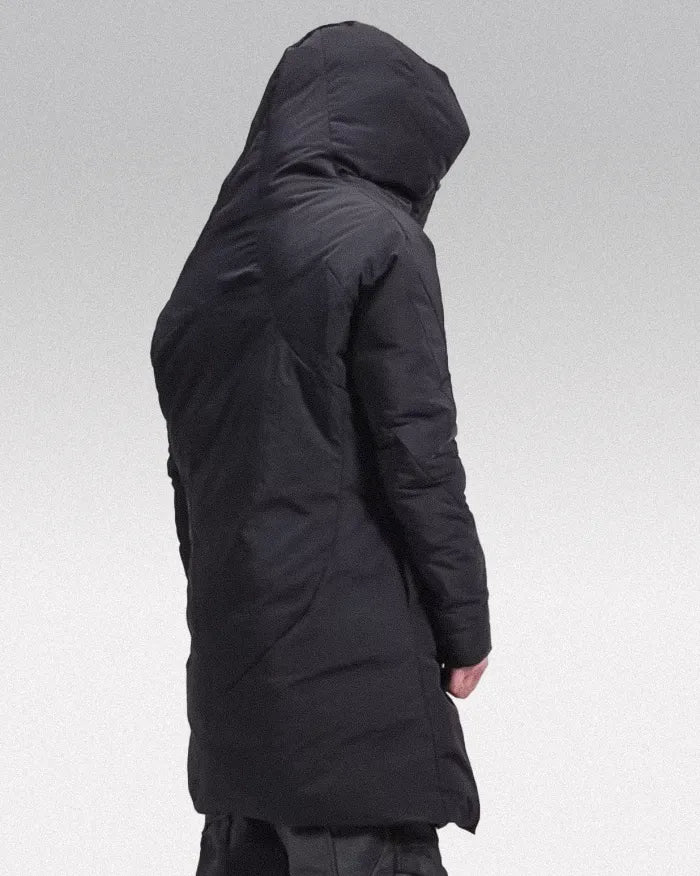
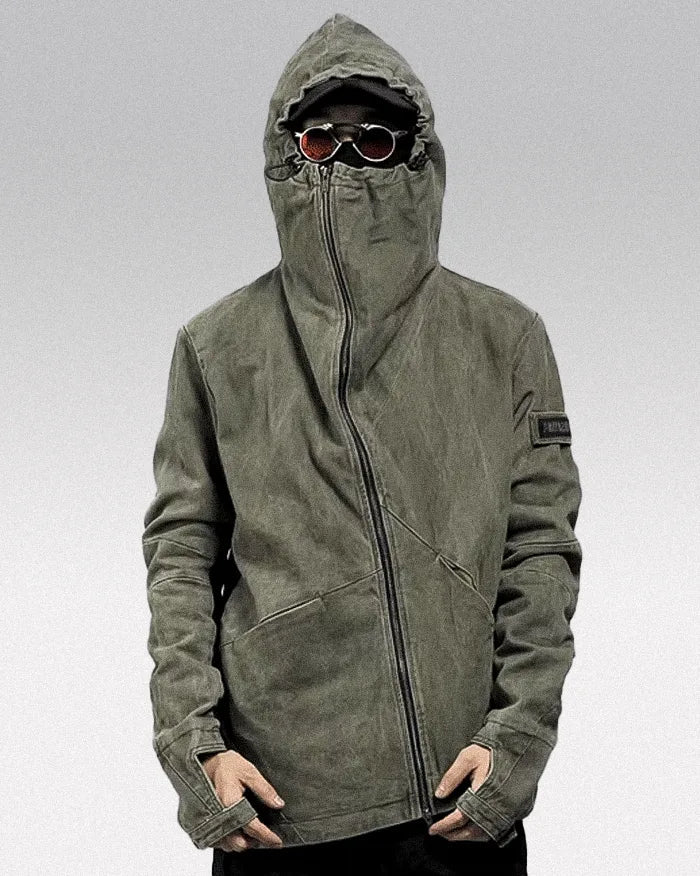
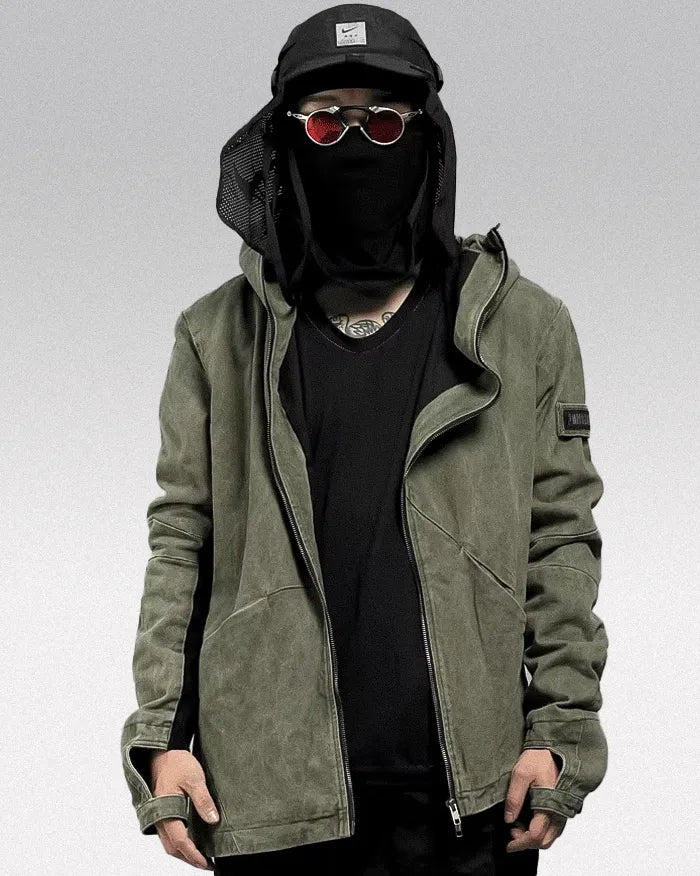
Look for oversized blazers with exaggerated shoulder structure, asymmetric zip-down jackets, long trenches that sweep the ground, and cropped coats with curved hems that descend in unexpected places. The wool felt pieces in particular owe a clear debt to the quiet luxury houses of Lemaire and The Row.
Oversized Blazers and Long Coats
The oversized blazer has become a wardrobe staple in avant-garde dressing. Worn with wide-leg pants underneath, it builds the elongated rectangular silhouette that flatters every body type. Long coats extend this logic vertically, creating a single sweeping line from shoulder to ankle. These are investment pieces in terms of impact, even when the price stays reasonable.
Asymmetric and Deconstructed Jackets
Where the blazer is the calm choice, the asymmetric jacket is the statement. Zippers placed off-center, hems that fall on a diagonal, panels that wrap and overlap, and details that look almost unfinished on purpose. These pieces channel the Margiela and Demeulemeester tradition of using construction itself as ornament.
Statement Layering Pieces
Vests, drapes, capes, and asymmetric tops fill the gap between the obvious wardrobe categories. These are the pieces that make a full avant-garde outfit work, by adding vertical layers, texture contrast, and silhouette interruptions. Layering is not about warmth in this style. It is about composition, the same way a painter composes a canvas.
How to Style Avant-Garde Outfits
Styling avant-garde clothing is less about following rules and more about understanding proportion, texture, and restraint. The mistake most people make when trying this style for the first time is overdoing it, layering too many statement pieces, or mixing the avant-garde with streetwear elements that fight the silhouette. Below are the three approaches that work consistently, used by stylists and editors who actually dress in this style every day.
The All-Black Architectural Look
The total black outfit is the safest entry point into avant-garde dressing, but only if you handle texture correctly. Combine a wool felt blazer with a faux leather pant, a cotton drape top underneath, and finish with a heavy boot. Every layer should feel different to the touch even though everything reads as black from across the room. The depth comes from material contrast rather than color contrast.
Avoid shiny synthetic fabrics that flatten the look. Avoid anything with visible branding, large prints, or distressed effects, since these belong to other style families and will fight the architectural intent.
Mixing Greys and Neutrals for Quiet Luxury
If you want to step outside total black without losing the avant-garde mood, the quiet luxury palette is the natural next move. Heather grey, off-white, ecru, and warm beige all work together when combined with discipline. A grey wool felt jacket over a black pleated trouser, finished with a neutral knit underneath, creates a calm sculptural look that owes more to Lemaire and The Row than to streetwear. The key is keeping the palette tight: pick two or three tones and let the silhouettes carry the rest.
Layering Without Bulk: The Japanese Approach
Japanese avant-garde designers built their reputation on layering, but their layers are never bulky. The trick is to mix long and short, fitted and oversized, structured and draped, all in the same outfit. A long asymmetric coat over a cropped jacket, worn open over a fitted base layer, creates vertical interest without weight. Think in strata, not in piles. Every layer should have a clear reason to exist, whether it adds length, breaks a line, or introduces a new texture.
The Designers Who Defined Avant-Garde Fashion
Understanding avant-garde clothing starts with understanding the people who built the movement. These are the names worth knowing if you want to develop a real eye for the style and not just buy pieces blindly. The references below have shaped every avant-garde collection produced in the last forty years, including ours.
Japanese Pioneers: Yamamoto, Kawakubo, Miyake
Yohji Yamamoto, Rei Kawakubo, and Issey Miyake are the trinity that brought avant-garde clothing into modern fashion. Yamamoto introduced the all-black flowing silhouette and made loose tailoring a global signature. Kawakubo, through Comme des Garçons, pushed deconstruction and conceptual fashion to its furthest extreme, with collections like Body Meets Dress reshaping how designers think about the human form. Miyake combined science and fashion, inventing pleating techniques and fabric innovations that no one had attempted before. Together, these three designers shifted fashion's center of gravity from Paris to Tokyo and back, and every avant-garde piece sold today carries some trace of their influence.
The Antwerp Six and Belgian Deconstruction
In the mid-1980s, six graduates of the Royal Academy of Fine Arts in Antwerp took the Japanese revolution and pushed it through a European filter. Martin Margiela built an entire house around anonymity and deconstruction, famously hiding his face in every public appearance and letting the garments speak alone.
Ann Demeulemeester brought romantic minimalism and literary references to the movement. Dries Van Noten contributed a more colorful, print-driven take. These designers proved that avant-garde was not just a Japanese phenomenon but a global language, and their work continues to inspire smaller labels and emerging designers across Europe and Asia today.
Modern Avant-Garde: Rick Owens, Iris van Herpen, Robert Wun
The modern era has produced its own avant-garde icons. Rick Owens built a fashion empire around dark, draped, gothic minimalism and made the Owens silhouette one of the most copied in contemporary fashion. Iris van Herpen blends 3D printing with biomorphic forms to create couture that looks more like sculpture than clothing.
Robert Wun, working out of London, has revived sculptural dramatic tailoring and become a favorite of red-carpet stylists looking for something beyond the predictable. Avant-garde fashion is alive and evolving, and these designers prove the movement has never been more relevant than now.
Avant-Garde for Men and Women: A Genderless Wardrobe
One of the defining qualities of avant-garde clothing is its rejection of strict gender categories. Traditional Western tailoring divides garments rigidly between menswear and womenswear, with different proportions, cuts, and conventions for each. Avant-garde clothing largely ignores this division. Yamamoto, Kawakubo, and Margiela all built collections where the same piece could be worn by anyone, with the wearer's body interpreting the garment rather than the garment shaping the body.
This tradition has its roots in the Japanese kimono, which was historically cut almost identically for men and women, with only minor variations in details. Our avant-garde collection follows this same logic: most pieces are designed in oversized silhouettes that work across body types and genders. Pick the piece that speaks to you, regardless of how it is labeled, and trust the cut to do its job.
Why Shop Avant-Garde Clothing at TECHWEAR STORM™
Avant-garde clothing is a niche, and most large retailers either ignore it entirely or water it down into something unrecognizable. Our collection takes a different approach: every piece is selected for its alignment with the real codes of the movement, not for its likelihood to sell to people who do not understand the style.
Curated Designer-Inspired Pieces
We do not stock everything that looks vaguely dark or edgy. Each piece in our avant-garde collection has been chosen because it speaks the language of architectural cut, intentional silhouette, and restrained palette.
The references are clear: Japanese tailoring, Belgian deconstruction, quiet luxury minimalism, and the broader dark avant-garde tradition. You will not find generic streetwear here, dressed up with vague edgy branding. You will find pieces that earn their place in a serious avant-garde wardrobe.
15-Day Return Policy
Avant-garde clothing often requires getting used to. Silhouettes that look unusual on a hanger transform when worn, and pieces that seem oversized in photos often fit perfectly in real life. We back every order with a 15-day return policy so you can take your time, try the piece in your own wardrobe, and decide whether it earns its place. Buying online from a niche collection should not feel like a gamble.
Build Your Avant-Garde Wardrobe Today
Avant-garde clothing rewards patience. You do not need to buy ten pieces to start. One well-chosen oversized blazer, one pair of pleated wide-leg trousers, or one asymmetric coat can transform an entire wardrobe and shift the way you think about getting dressed. Start with the silhouette that excites you most, build slowly, and let the collection grow as your eye develops.